
Reviewed · UBUD WALKING TOURS
Ubud: 3-Hour Walking Tour with Lunch
Ubud’s countryside makes more sense when you leave the main roads and walk through the rice paddies with someone who lives there. This three-hour outing pairs a village visit and rural walk with a coffee tasting and lunch at a local home, so you get more than a scenic stroll.
I like two things in particular: the chance to see a family compound and learn how Balinese Hindu life fits into daily routines, and the walk through working rice fields, where your guide can explain the subak irrigation system. The meal at the end makes the visit feel personal, not just like a string of photo stops.
The main consideration is that three hours includes several stops, transport, and lunch, so it is not three hours of continuous walking. Paths can be slippery or steep, too. Wear shoes with good grip, and ask about the walk if you have mobility concerns.
At a glance: five reasons to consider the walk
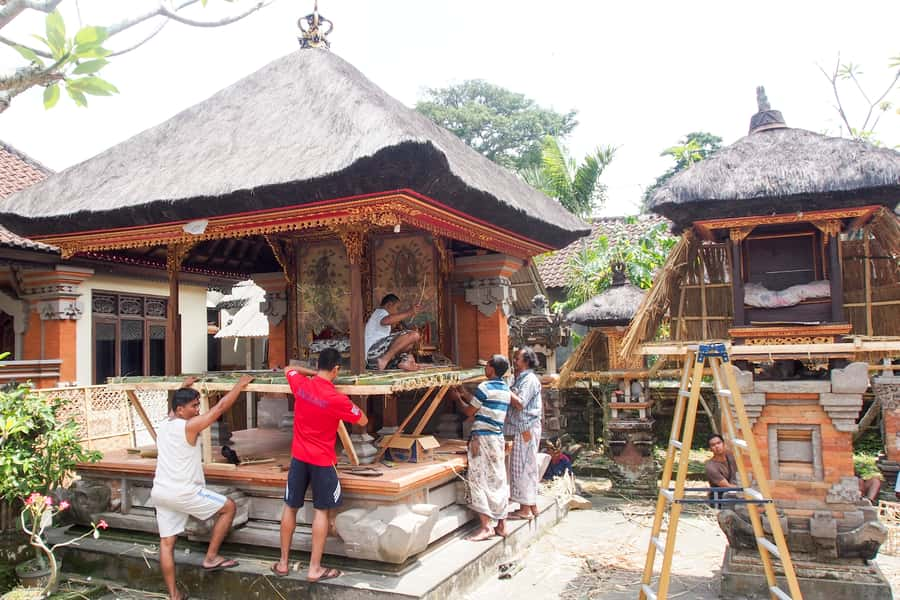
- Visit a traditional family compound: See a local home and temple, with an English-speaking guide explaining Balinese family life and religious customs.
- Walk through working rice country: Follow village paths, forest, and paddies, and learn about rice growing and the subak irrigation system.
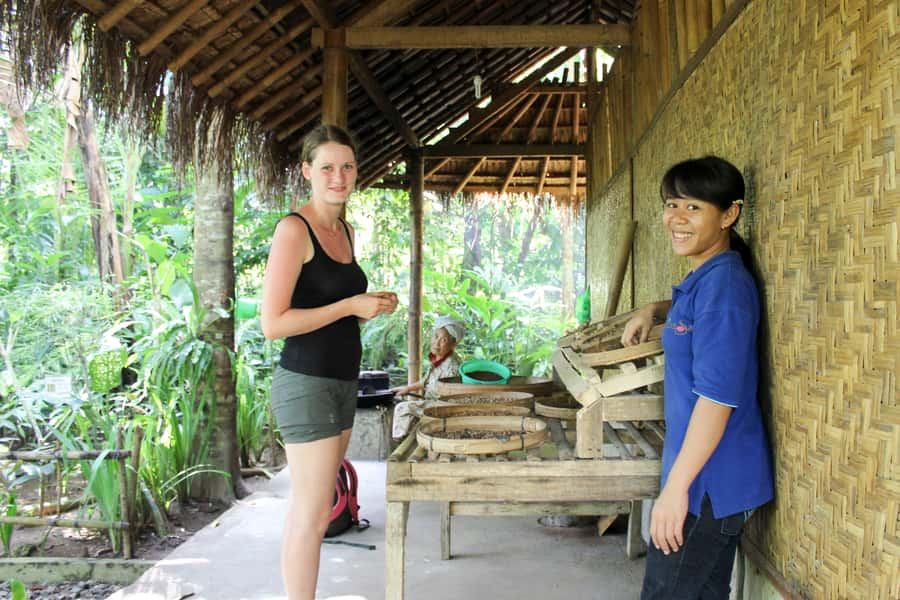
- Try local coffee and herbal teas: A plantation stop includes tastings, with purchases optional.
- Share lunch at a local home: Expect Indonesian food, often nasi goreng and fresh fruit, served after the walk.
- Get practical help along the way: Ubud hotel pickup, cold water, and a cool towel are included. Bring grippy shoes, sun protection, and cash.
Begin at a family compound and temple
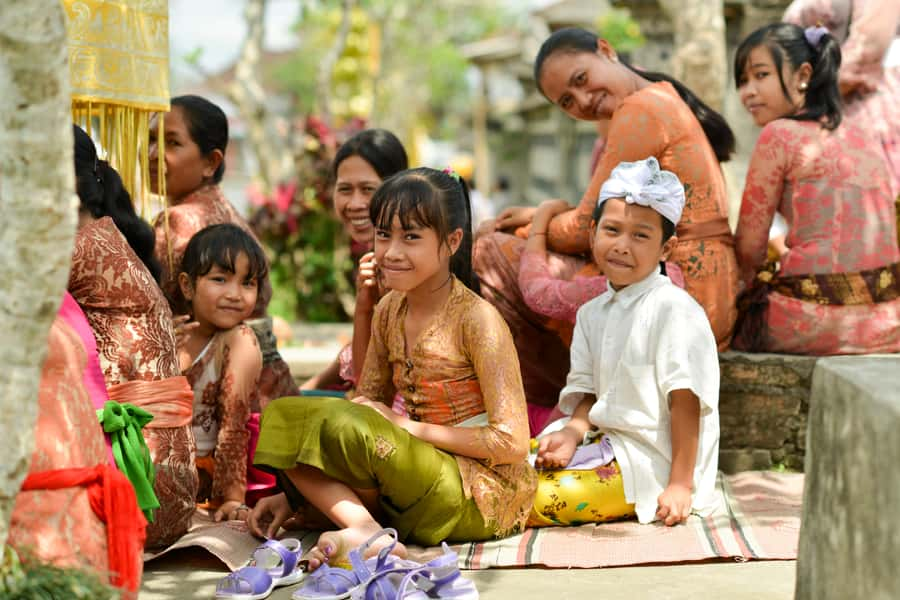
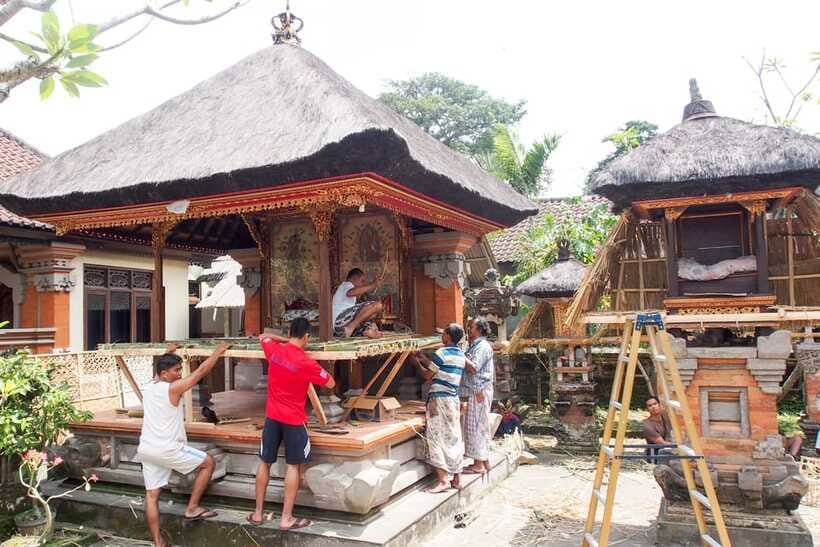
The tour begins with a visit to a traditional Balinese family compound, sometimes including a family temple. This is a useful place to start because the guide can explain how home, family, and religious practice connect before you head into the countryside.
The outing description includes a morning ceremony and a blessing from a Brahman priest at a griya family compound. Ceremonies are part of local life, not a staged performance, and their timing can depend on what is happening that day. Treat the blessing as a meaningful possibility within the morning visit, rather than assuming you will see every kind of ceremony on every departure.
Wayan, the guide named most often for this tour, has shown people around his family’s compound and explained local customs, religion, and history. The personal setting is valuable: you can ask questions in a real home, rather than trying to piece together cultural details from a temple visit alone.
A family compound is not simply a single house. It is a shared setting where family life and religious practice meet. Your guide can help you understand what you are seeing, though you should remember that you are visiting someone’s home. Follow instructions about where to go and how to behave, and dress respectfully for temple spaces.
More walking tours around Bali:
- Sidemen Trekking: A Walk from a Different Perspective
★ 4.9 · 324 reviews - Sidemen Trekking: A Walk from a Different Perspective
★ 5.0 · 94 reviews - Sidemen rice terraces trek and local village walk
★ 5.0 · 41 reviews
Follow village paths into the rice fields
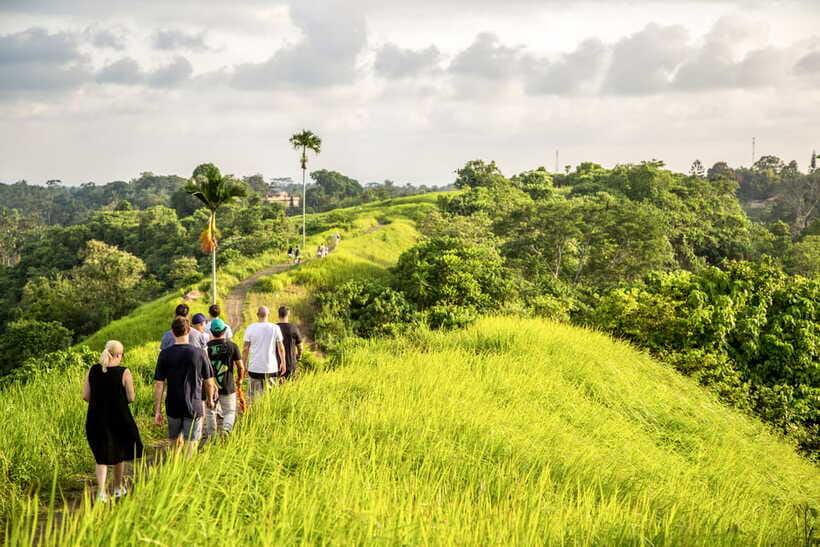
After the opening visit, you travel to the starting point of the walk. The route passes through rural scenery, with rice paddies, forest, and village life rather than a steady succession of built attractions. One account describes a walk of about five kilometres, while another describes roughly two hours among fields and forest. The exact route and walking time may vary.
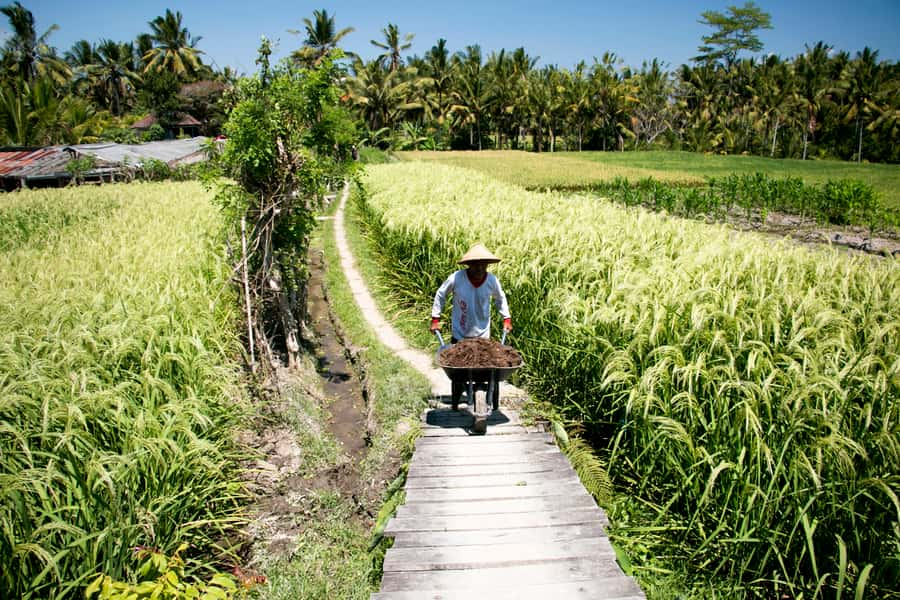
The paddies are the heart of this outing. Your guide can explain how rice is grown and how the subak irrigation system distributes water through the fields. That context turns a pretty view into a working place: the water, paths, and planting cycles all have a purpose.
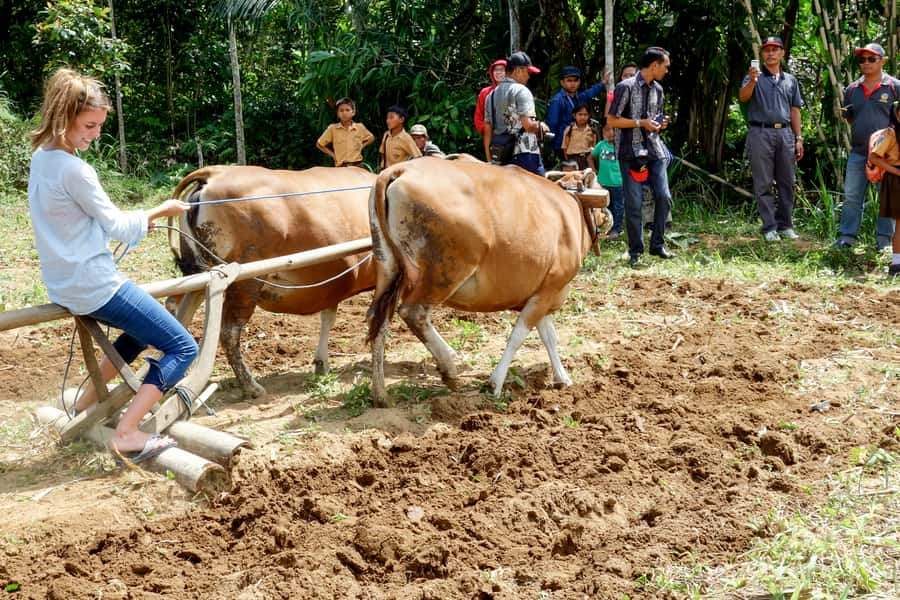
You may see locals tending their land, and, if conditions line up, cattle pulling a traditional plow through the mud. There is no guarantee of a particular scene, since farm work changes with the season and the day. But even without a plow or a harvest in progress, walking through the fields gives you a closer look at rural routines than a roadside viewpoint can.
Expect uneven footing. Some sections pass through mud, steep ground, or slippery paths, and the route may include forest trails. Good walking shoes with firm grip are more useful than sandals. A visitor with a bad leg was helped over tricky sections by the guide, but that courtesy should not be taken as a promise that the walk suits every mobility level.
The pace appears flexible enough for questions and photo stops. Wayan is described as patient and willing to explain local plants, fruit, and spices, as well as culture and family life. If you prefer a quieter walk, say so: the tour is meant to be guided, but it need not become a nonstop lecture.
Pause at a craftsman’s workshop or waterfall

The planned route can include a traditional craftsman’s workshop and one or more waterfalls. These stops add variety to a walk focused mainly on village life and rice cultivation, though the precise sequence and time spent at each can vary.
A workshop visit offers a chance to see local craft in context, rather than only encountering finished goods in a shop. The supplied details do not specify which craft or whether a purchase is expected, so go with curiosity and ask your guide what the artisan is making. If shopping is not your priority, you can still treat the stop as a brief look at local work.
The waterfall stop brings a change of pace and scenery. It is worth keeping expectations practical: the tour promises a visit to a beautiful waterfall or waterfalls, but does not name a specific site or guarantee a particular water flow. The countryside itself is a key part of the appeal, so a short stop can be enough to enjoy the natural setting before continuing.
Taste plantation coffees and herbal teas
The coffee plantation is a relaxed pause after the walk. You can sample local coffees and herbal teas, which gives you a taste of Balinese ingredients and brewing styles without turning the stop into a formal class. The tasting is included, and you can choose whether to buy anything afterward.
For some, the plantation is a highlight; for others, it is a pleasant extra rather than the main reason to book. The tour details do not promise a particular coffee-making demonstration or explain how each product is grown, so ask your guide or plantation host if you want more background.
There may also be an option to try a Bali swing at the plantation, but that is not part of the included tour. Budget extra time and money only if you are interested, and check the terms on site. You do not need to take part to enjoy the tasting.
More tours with lunch around Bali:
- Bali: Gitgit Canyon Canyoning Trip with Breakfast and Lunch
★ 5.0 · 193 reviews - Ubud: Wellness Retreat with Massage, Yoga Class, and Lunch
★ 4.8 · 93 reviews - Bali: Mount Batur Mountain Biking Adventure with Lunch
★ 4.7 · 7 reviews - Ubud ATV Ride with Waterfall, Dragon Cave & Lunch – 2 Hours
★ 5.0 · 5 reviews
End with lunch at a local home
Lunch rounds out the outing with a meal at a local home or guest house, often overlooking rice fields and temples. The menu is Indonesian, with nasi goreng and fresh fruit mentioned as examples. The meal is included in the $30 price, which makes it a meaningful part of the value rather than an add-on.
The setting matters as much as the food. Sitting down after walking gives you time to ask questions and talk with your guide in a less hurried way. In some outings, the meal is cooked by Wayan’s wife, adding a direct link to the household that has welcomed you.
Food is always personal, so do not expect a restaurant-style menu or a long list of choices. One person found the lunch ordinary, while many others praised it. If you have dietary needs, the available information does not specify substitutions, so ask the operator before booking rather than assuming they can be accommodated.
What $30 gets you, and where the extras begin
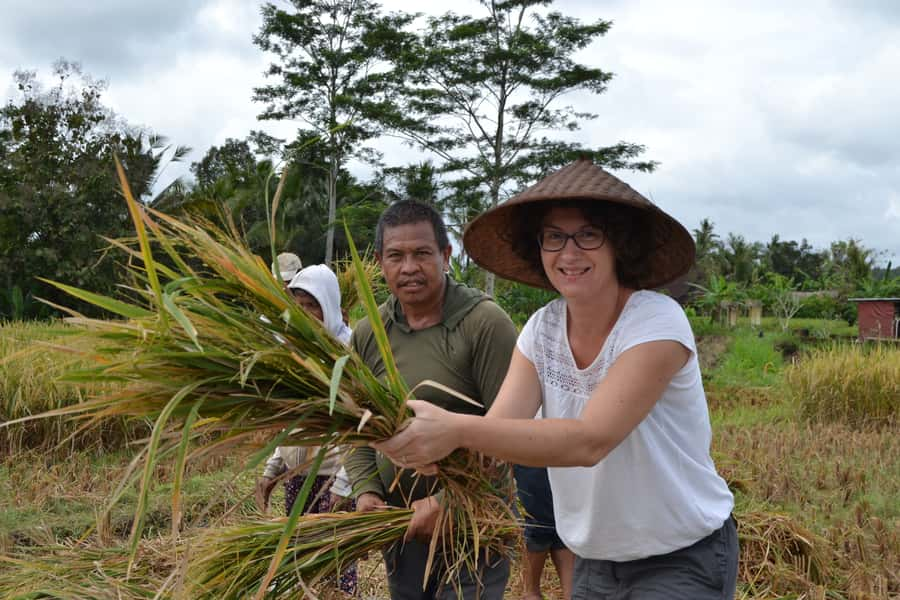
At $30 per person, the price includes a guide, Ubud hotel pickup and drop-off, cold water, a cold face towel, a snack, and lunch. You also get the compound visit, rural walk, and coffee and tea tasting. That is strong value if you want a guided introduction to village life rather than just a transfer to a viewpoint.
The guide is a large part of what makes the outing worthwhile. Wayan is repeatedly described as friendly, patient, and able to explain Balinese culture in English. People have also valued his practical care on rough sections, including help with a walking stick or sarong when needed. The tour’s transport is rated highly, with 89 percent of reviewers giving it a perfect score.
If you are staying outside Ubud, transport costs extra: IDR 300,000 from Sanur, IDR 400,000 from Kuta, and IDR 500,000 from Nusa Dua. Special transfers from other areas may be possible with planning. These charges can change the value calculation for a solo visitor or a group, so confirm the total before booking.
The advertised duration is three hours, but some outings have taken longer without an extra charge. That flexibility is welcome if you have room in your schedule. If you have a tight connection or a fixed appointment afterward, allow more time rather than treating the three-hour estimate as a firm end time.
Plan for an early start and country footing
Pickup from Ubud is generally between 8:00 and 8:30 a.m. Sanur and Kuta pickups are listed between 7:30 and 8:00 a.m., while Jimbaran and Nusa Dua pickups are between 7:00 and 7:30 a.m. Outside-Ubud transfers cost extra, so confirm both the pickup time and fee when arranging your booking.
Pack proper walking shoes, a hat, sunblock, mosquito repellent, a camera, and cash. Water and a cold towel are supplied, but they do not replace sun protection or footwear with grip. Cash is useful if you want to buy coffee or pay for an optional activity at the plantation.
The tour is in English, and hotel pickup is included for Ubud stays. You can reserve without paying immediately and cancel up to 24 hours before the activity for a full refund. Those terms add flexibility, but the practical question is whether you are comfortable with a rural walk on uneven ground.
Who will get the most from this Ubud walk?
I would choose this outing if you want a first-day orientation that goes beyond Ubud’s shops and central streets. The family compound gives you cultural context, the walk shows how the countryside works, and lunch gives the morning a human ending. It also suits people who like asking questions and want a guide to connect the sights.
It is a good fit for curious walkers who are comfortable with a few rough or slippery sections. Solo visitors may find a private outing possible when there are no other bookings, but that is not guaranteed. The walking route may be a poor choice if you need smooth, level paths or cannot manage steep ground.
The trip is less suitable if you want a strenuous all-day trek, an in-depth coffee lesson, or a tightly timed itinerary. It is a sampler: a compound, countryside walk, possible workshop and waterfall stops, plantation tasting, and lunch, all within a short half-day format. The parts work best when you let the guide set a comfortable pace and make time for conversation.
Should you book this walk?
Book it if you want a friendly, practical introduction to life around Ubud and value a local guide’s explanations as much as the scenery. The strongest reasons are the family compound, the walk through working rice fields, and lunch at a local home. At $30, the combination is appealing, especially with Ubud transfers included.
Think twice if uneven paths are a problem, or if you need the outing to finish exactly three hours after pickup. Confirm the extra transfer fee if you are based outside Ubud, and bring shoes that can handle mud. If those points work for you, this is a good way to trade a few hours of sightseeing for a closer look at Bali’s countryside.
FAQ
How long is the Ubud walking tour?
The tour is advertised as three hours. Some outings have lasted longer, so leave extra room in your schedule if you have a commitment afterward.
What is included in the $30 price?
The price includes hotel pickup and drop-off in Ubud, cold water, a cold face towel, a snack, lunch, and the guided outing.
Is hotel pickup available outside Ubud?
Yes, with additional charges. The listed fees are IDR 300,000 from Sanur, IDR 400,000 from Kuta, and IDR 500,000 from Nusa Dua.
What time does pickup begin?
Ubud pickup is between 8:00 and 8:30 a.m. Pickups from Kuta and Sanur are between 7:30 and 8:00 a.m. Jimbaran and Nusa Dua pickups are between 7:00 and 7:30 a.m.
What should I bring?
Bring walking shoes with good grip, a hat, sunblock, mosquito repellent, a camera, and cash. Water and a cold face towel are provided.
Is lunch included?
Yes. The tour includes an Indonesian lunch at a local home or guest house. Nasi goreng and fresh fruit are among the dishes served.
Is the coffee and tea tasting included?
Yes. The plantation stop includes tastings of local coffees and herbal teas. Purchases and an optional Bali swing are not included.
Can I cancel or pay later?
You can reserve without paying immediately and cancel up to 24 hours in advance for a full refund.
More three-hour experiences around Bali
- Ubud: 3-Hour Wood Carving Master Class
★ 4.6 · 278 reviews - Ubud: 3-Hour Batik Making Class
★ 4.7 · 178 reviews - 3 Hours Batik Making Classes in Ubud
★ 5.0 · 203 reviews
Fresh listings around Bali
- Monkey Forest, Ubud, Waterfall and Rice Terrace★ 4.5 · 53 reviews
- Mount Batur Jeep Sunrise by 4WD with Breakfast★ 5.0 · 18 reviews
- Kintamani Volcano View Tour★ 4.5 · 3 reviews
- Ubud ATV Ride with Waterfall, Dragon Cave & Lunch – 2 Hours★ 5.0 · 5 reviews
- Bali Ubud & Kintamani Volcano Tour -All Inclusive★ 5.0 · 6 reviews
- Private Full-Day Tour to the Real Bali Swing and Ubud★ 4.5 · 9 reviews
- North Bali: Ulun Danu, Waterfalls, Swing and Monkey Forest★ 5.0 · 39 reviews
- Mount Batur: Black Lava Cycling Tour w/ Natural Hot Spring★ 3.8 · 63 reviews
Ubud Walking Tours, compared.

Sidemen Trekking: A Walk from a Different Perspective
Read our review →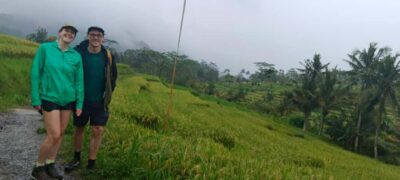
Sidemen rice terraces trek and local village walk
Read our review →
Bali Bliss: Yoga, Floating Breakfast and Rice terrace walk
Read our review →Browse the lists this tour appears in