
Reviewed · UBUD WALKING TOURS
Sidemen Trekking: A Walk from a Different Perspective
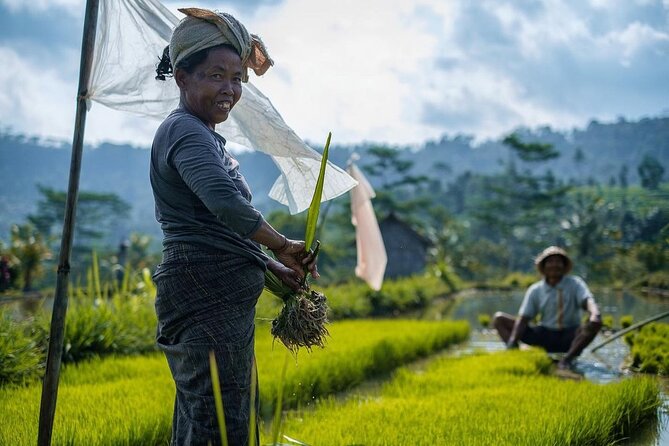
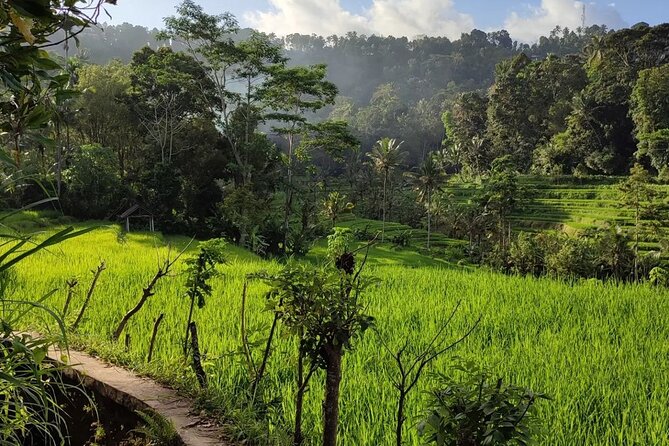
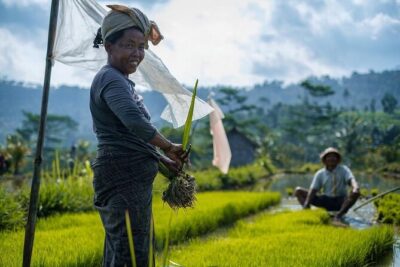
Sidemen’s rice fields are more than a pretty backdrop here. You follow the small paths farmers use, trace irrigation channels through the paddies and hear how rice growing fits into daily village life, with Mount Agung rising beyond the fields when the weather allows. I like that the route goes places you would be unlikely to find on your own, and that guides such as Adi and Darya connect the scenery to farming, food and local customs.
I also like the modest price, $13.75 per person, and the small group limit of 10, which leave room for questions and conversation. The trade-off is that this is an easy-paced walk, not a demanding hike, but some rice-field paths are narrow, elevated and slippery. You need steady footing more than athletic stamina.
At a glance
- Market to paddies: Start at Pasar Sidemen, meeting at the shop marked Upa Boga, then walk through the village toward the fields.
- Farm paths, not paved trails: Some sections follow narrow paths beside irrigation channels, with uneven footing and little room to pass.
- Local context: Guides explain rice cultivation, village life and Balinese customs, with details that can change with the season.
- Mount Agung views: The volcano can frame the rice fields, though clouds and weather affect what you see.
- A short, small-group walk: Plan for about two to two and a half hours, in a group of no more than 10.
- Arrange your ride home: The walk ends at Warung Ume Anyar, where a prearranged driver is more dependable than counting on a quick Grab pickup.
From Sidemen market to the village lanes
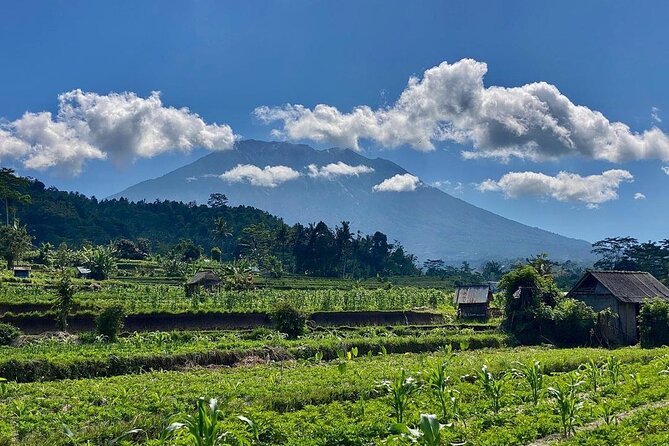
The walk begins at Pasar Sidemen, the traditional market, at the shop with the sign Upa Boga. If you book a morning start, you can visit the market beforehand: it is open from 5:00 to 10:00 a.m. That is a useful extra, not a guaranteed part of the trek, so allow time for it when choosing your session.
From the market, the route passes through the village and along streets that rise and fall before reaching the rice fields. This opening stretch helps set the scene. Sidemen is not only a view of green terraces; it is a working community, and the guide can explain what you are seeing as you move through it.
The walk is usually described as relaxed and manageable, but do not confuse easy pace with perfectly smooth ground. The route includes changes in elevation and uneven surfaces. You will want comfortable walking shoes and enough balance to step carefully when the path narrows.
More walking tours around Ubud:
- Sidemen Trekking: A Walk from a Different Perspective
★ 4.9 · 324 reviews - Ubud: 3-Hour Walking Tour with Lunch
★ 4.8 · 85 reviews - Sidemen rice terraces trek and local village walk
★ 5.0 · 41 reviews
Following water through the rice fields
The most distinctive part of the route is the move from village lanes to the paddy fields. Rather than staying on a clear, broad trail, you follow small farm paths and the irrigation system that carries water through the fields. These routes are practical paths used by people working the land, which is exactly why a local guide matters: without one, some turns and tracks would be hard to spot.
Expect close-up views as well as broad ones. You may walk along raised edges between fields, with water channels nearby and rice plants or other crops at your feet. At times, the paths are narrow enough that you will need to watch each step and give yourself room to balance. Recent rain can make the ground slippery, so hiking shoes or sturdy walking shoes are a sensible choice, and you should not mind getting them muddy.
The guide’s explanations add substance to what could otherwise be a scenic stroll. You can learn about how rice is grown and processed, how the irrigation works and how crops fit into local cooking. The fields change with the season. In December, for example, some rice may already have been harvested, while other crops are being planted. A field without tall green rice is not necessarily a disappointment; it can be a chance to see a different stage of farm work.
Other crops may appear along the way, including chili and pepper. Guides have also explained flowers used in offerings and the role of religion in everyday village life. The exact details depend on what is growing and happening on the day, but the focus is on the working countryside rather than a staged demonstration.
A wooden bridge, a temple and Mount Agung
The route follows irrigation water and crosses a hanging wooden bridge used by both people and motorbikes. It is a memorable change of pace from the field paths, and a reminder that these routes are part of local life, not a trail built solely for sightseeing. Take care crossing, especially if the surface is wet or other people are using it.
You also pass a temple used by local villagers for prayer. The guide can offer context about Balinese Hindu practice and how religious customs connect with daily routines. Treat the temple and the surrounding area with respect, and follow your guide’s lead about where to walk and how to behave.
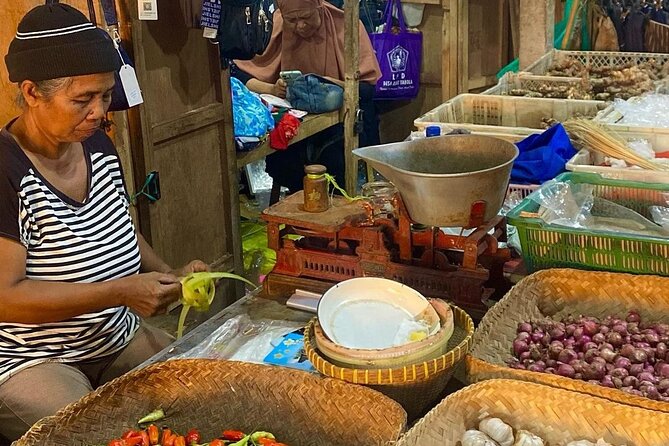
Mount Agung provides the big view when conditions cooperate. From the fields, the volcano gives the walk a strong sense of place, while the terraces and irrigation lines show the human work that shapes the countryside. Clouds can obscure the mountain, so consider it a welcome possibility rather than a guaranteed photo.
The best moments are not all grand panoramas. Guides such as Adi, Darya and Wayan have been praised for knowing the people and small paths of the area, and for sharing details in an informal way. You may hear about farming, local food, religious beliefs and changes affecting Bali. The experience works well when you are curious and willing to ask questions, rather than simply hurrying from one viewpoint to the next.
What the walk asks of you
The tour is listed as requiring moderate fitness, but stamina is only part of the equation. Several people find the pace easy; the trickier element is balance on narrow raised paths beside the rice plots and water channels. If you are unsteady on your feet, uncomfortable with uneven ground or concerned about slipping, this may not be the right outing.
Wear hiking boots or sturdy walking shoes, a sun hat, sunscreen and sunglasses. Those are required items, not optional polish. Bring water as well: bottled water is included, but sun and open fields can make a short walk feel hotter than the duration suggests.
The group is limited to 10, which helps keep the guide’s explanations audible and allows the walk to feel personal. Some bookings may be private, but you should not assume you will have a private guide. The pace includes stops for looking, listening and taking photos, so allow two to two and a half hours rather than planning a tight connection afterward.
More hikes and treks around Ubud:
- Mount Batur Sunrise Hike and Natural Hot Spring Option
★ 5.0 · 1,927 reviews - Mount Batur Sunrise Hike with Breakfast
★ 5.0 · 1,757 reviews - Mount Batur Sunrise Trekking Private All Inclusive
★ 5.0 · 906 reviews - Private Mount Batur Sunrise Trekking Tour
★ 5.0 · 634 reviews
Finishing at Warung Ume Anyar

The walk ends at Warung Ume Anyar in Ogang Village. It is a practical place to pause for a drink or meal after the route, and a gentler finish than retracing your steps straight away. Food and drinks are not listed as included, so budget for anything you order there.
Transport deserves advance thought. Hotel pickup and drop-off are not included, and the finish point is not the same as the market start. If you have a driver, ask them to collect you at Warung Ume Anyar roughly two to two and a half hours after the trek begins. That buffer accounts for the route and any pauses.
Grab is available in the area, but there are only a few drivers, and pickup may take time. Some drivers may ask for offline payment or an extra payment. If you are staying in Sidemen, arrange transport to the start through your hotel; some hotels allow Grab drop-offs but do not allow drivers to collect guests. Walking back to the market is possible, but it adds about 3 km, or 30 to 40 minutes along the main road.
What $13.75 gets you

At $13.75 per person, this is an appealing way to spend two hours if you want more than a roadside view of rice terraces. The price covers a local guided walk and bottled water. The value is less about covering a long distance and more about access to small farm paths, local explanations and a route that would be difficult to follow confidently alone.
You are not paying for transport, a meal, a strenuous hike or a polished visitor attraction. Tips are not included, either. Factor in your ride to the market and your pickup from the restaurant when comparing the cost with other activities. Group discounts may be available, and the group cap is 10, but check the booking details for the terms that apply to your dates.
The tour is best for people who want to understand Sidemen as a place where people live and work. It is a good fit if you enjoy rural walks, agriculture and conversation with a local guide. It is less suitable if you want a challenging hike, a fully paved route or a guaranteed clear view of Mount Agung.
Weather also matters. If poor weather forces cancellation, you will be offered another date or a full refund. For other cancellations, you can receive a full refund if you cancel at least 24 hours before the start time. Changes or cancellations inside that window are not accepted for a refund.
Should you book the Sidemen trek?
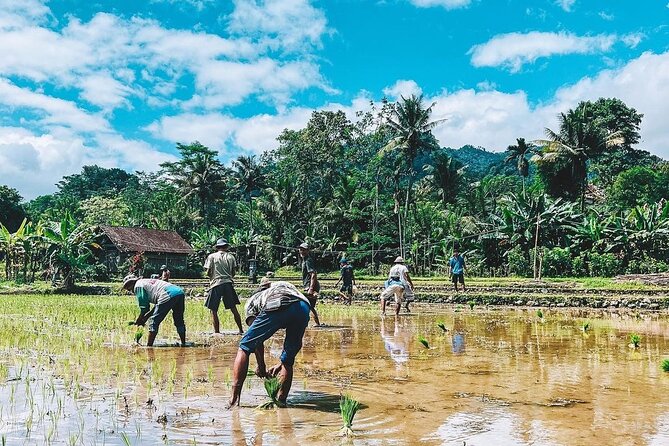
Book this walk if you are staying in or near Sidemen and want a closer look at rice farming, village customs and the paths between the fields. The guide is central to the experience: names vary, but Adi, Darya and Wayan are among those who have led walks, sharing local knowledge with humor and an easy manner.
Skip it if you are looking for a serious hike or cannot manage narrow, uneven footing. For everyone else, the short distance, modest cost and local perspective make this a useful counterpoint to Bali’s busier resort areas. Bring proper shoes, arrange your ride from the finish and leave enough time to walk without rushing.
FAQ
How long does the Sidemen trek take?
Plan for approximately two to two and a half hours. The route includes village streets, rice fields and stops, so leave a little extra time if you have plans afterward.
Where does the walk start and finish?
You meet at Pasar Sidemen, at the shop with the sign Upa Boga. The walk ends at Warung Ume Anyar in Ogang Village.
Is this a difficult hike?
It is generally an easy-paced walk, not a strenuous hike. However, some rice-field paths are narrow, elevated and sometimes slippery, so you need balance and comfortable walking shoes.
What should I bring?
Bring a sun hat, hiking boots or sturdy walking shoes, sunscreen and sunglasses. Bottled water is included.
Is transport included?
No. Hotel pickup and drop-off are not included. Arrange transport to the market and, especially, a pickup from Warung Ume Anyar in advance. Grab is available nearby, but there are few drivers.
Can I visit the market before the walk?
Yes. Pasar Sidemen is open from 5:00 to 10:00 a.m. If you want to explore it before trekking, book a morning session.
Fresh listings around Ubud
- Tour the island of Bali with expert tour guides in Spanish.★ 5.0 · 7 reviews
- Tour full day ubud, water fall,coffe atv,and rice paddy★ 5.0 · 6 reviews
- The Authentic Balinese Cooking Experience★ 5.0 · 4 reviews
- Sunrise Café and Morning Yoga Class★ 5.0 · 5 reviews
- Private Ubud Tour With Professional Photographer with Edit★ 5.0 · 53 reviews
- Quad Bike Bali With Tunnel & Waterfall Tour★ 4.2 · 8 reviews
- Private Ubud Tour: Sacred Monkeys, Coffee, Temple, Waterfall★ 4.8 · 3 reviews
- Private Silver jewelry Making Class With Master★ 5.0 · 3 reviews
Ubud Walking Tours, compared.
Sidemen Trekking: A Walk from a Different Perspective
Read our review →
Sidemen rice terraces trek and local village walk
Read our review →
Bali Bliss: Yoga, Floating Breakfast and Rice terrace walk
Read our review →Browse the lists this tour appears in