
Reviewed · UBUD COOKING CLASSES
Munduk Balinese Cooking Class lunch/Dinner at a Local Home
In Munduk, this cooking class takes you into a local family home, where you prepare a Balinese meal and then eat it with your hosts. The centerpiece is Nasi Campur, a plate of smaller dishes that brings together several flavors and techniques in one sitting. Host and instructor Kadek has led the class, and the visit may include time in the family’s garden or farm.
I like two things in particular: you learn to make Base Genep, the spice paste at the heart of many Balinese dishes, and the class leads straight to a shared lunch or dinner instead of ending with a demonstration. One consideration: the class lasts 2 to 3 hours, and the setting is in Munduk, so you will need to plan the trip around your other Bali stops.
Key points to know before you book
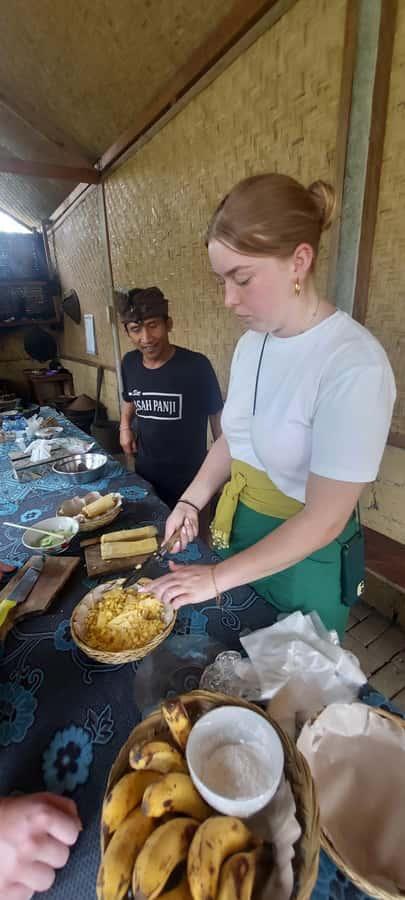
- The meal is the lesson: Prepare several dishes, then sit down to eat what you have made.
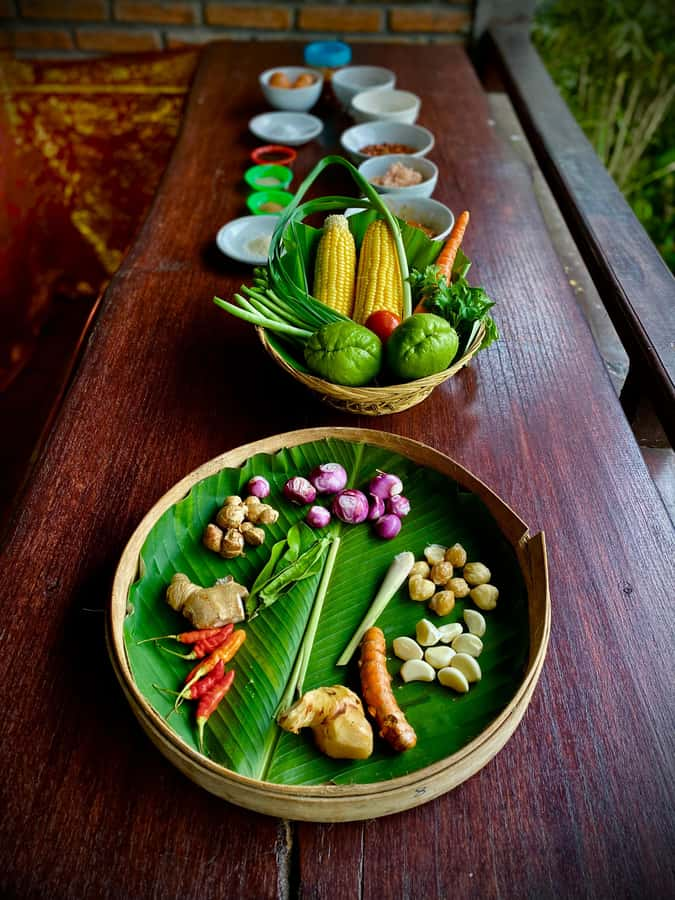
- Base Genep is central: You work with aromatics such as turmeric, ginger, galangal, shallots, garlic, lemongrass, and chili.
- Kadek has led the class: He has also shown visitors around the family’s farm and explained local life.
- Dietary changes are possible: Vegetarian, vegan, and options avoiding meat, wheat, flour, peanuts, or eggs are offered on request.
- Budget for two to three hours: The $18 price includes ingredients, equipment, drinking water, and lunch or dinner. Hotel transport is optional.
A family home, not a restaurant kitchen
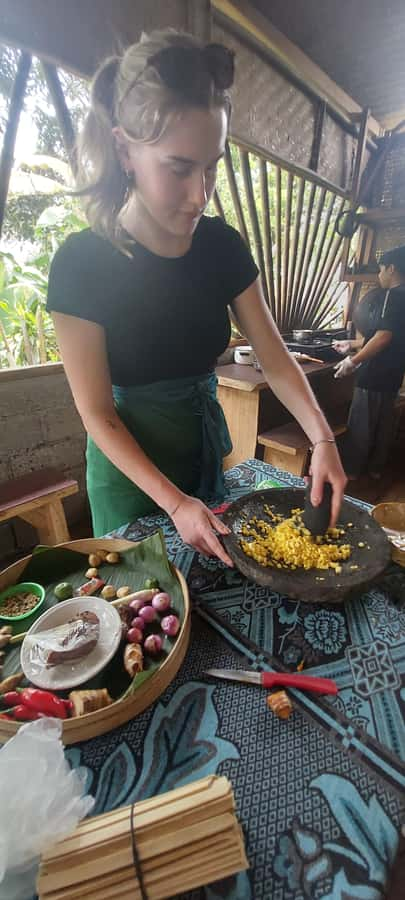
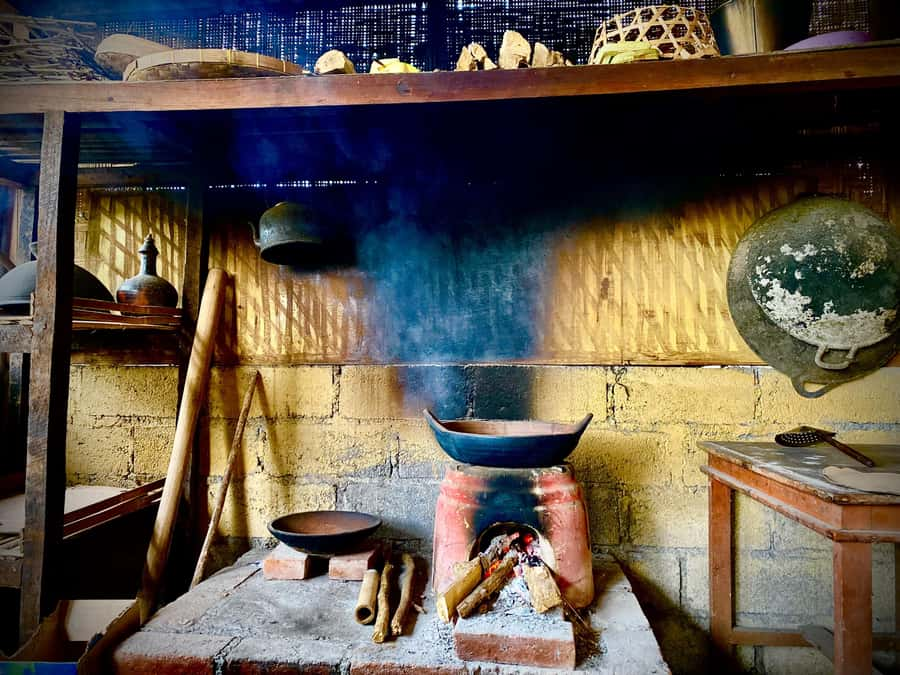
The setting is a local family home in Munduk, and that changes the feel of the class. You are not simply watching a cook work in a restaurant kitchen. You are welcomed into a family space, where food is tied to everyday routines, local produce, and the people who prepare it.
The host team speaks English, and Kadek is the instructor named for the experience. One visitor described being shown the farm while waiting for the class to begin, with the host talking about what he grows, his way of life, and his religion. That kind of conversation can make the visit more meaningful than a recipe lesson alone, though the exact welcome and farm visit may vary.
The atmosphere is described as warm and relaxed, with the hosts taking time to help people follow the cooking steps. That matters if your English is limited or you are new to the kitchen. One family group with children found it engaging, and the instructor was able to make himself understood despite a language gap.
This is a small-scale cultural encounter, but it is still a booked activity with a planned cooking session. It should not be confused with an open-ended home visit. You come to cook, ask questions, and share the meal, all within a two to three hour window.
More cooking classes around Ubud:
- Ubud Cooking Class Bali with Balinese Chef
★ 5.0 · 1,609 reviews - Ubud: Cooking Class with Transfers and Optional Market Visit
★ 4.9 · 824 reviews - PRIVATE Authentic Balinese Cooking Class in Ubud at Putu’s Home
★ 5.0 · 644 reviews
Building a Nasi Campur meal, one dish at a time
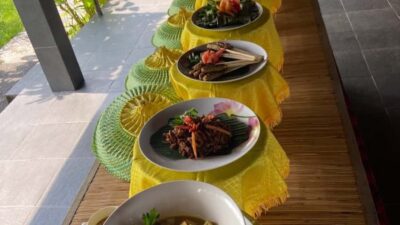
The class centers on Nasi Campur, a meal made from several smaller dishes served together. Rather than focusing on one complicated centerpiece, you learn how different textures and flavors combine on a single plate. For a curious eater, that is a useful introduction to the way Balinese meals can bring vegetables, protein, spice, and side dishes together.
The listed menu includes Sate Lilit, Bergedel, Balinese vegetable stir-fry, and jukut jepang, a soup made with chayote, local herbs, and spices. The exact mix may vary with dietary needs, but these examples show the range of the meal: grilled minced fish or chicken, fried potato patties, seasonal vegetables, and a light soup.
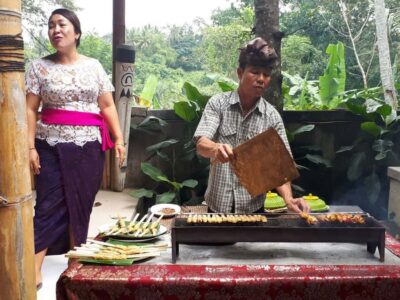
Sate Lilit is made by mixing minced fish or chicken with herbs and grated coconut, then wrapping the mixture around bamboo sticks before grilling. Bergedel are savory potato patties, with a crisp outside and soft center. The stir-fry uses seasonal vegetables, while jukut jepang brings chayote and local seasoning into a simple soup.
These dishes are practical teaching material. You get to see how a meal comes together from multiple parts, rather than learning only one recipe and missing the broader pattern. If you enjoy cooking, you can pay attention to the way herbs and spices are combined. If you are mainly there to eat, you still get a good sense of what goes into each dish.
Base Genep: the spice paste behind the flavors
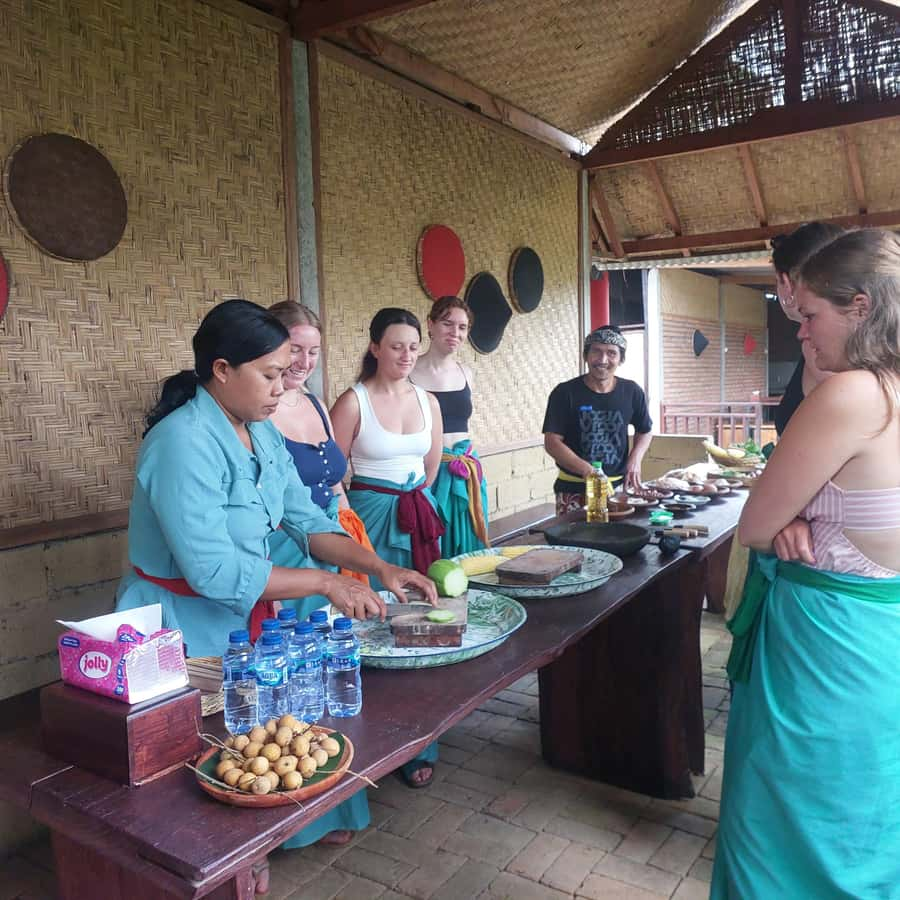
One of the most useful parts of the class is making Base Genep, a traditional Balinese spice paste. The ingredients listed include turmeric, ginger, galangal, shallots, garlic, lemongrass, and chili. You work with fresh ingredients and learn how they become a common seasoning base for Balinese cooking.
This is the sort of technique that can change how you understand a meal. Instead of treating the spices as an indistinct curry flavor, you see the separate ingredients and learn how they combine. It also gives you something practical to remember after the trip: a base recipe and a better feel for the aromas that shape the dishes.
The cooking is described as flavorful without being overwhelmingly spicy, and the class uses no MSG. That may suit you if you are curious about Balinese food but wary of very hot dishes. Still, chili is part of the listed paste, so tell the team in advance if you need a milder version.
The ingredients are fresh and locally sourced. That connects the cooking to Munduk and its nearby food-growing communities, although the experience does not promise a market visit. If seeing where ingredients grow interests you, ask whether time in the garden or farm is part of your particular session.
Cooking together, then eating together
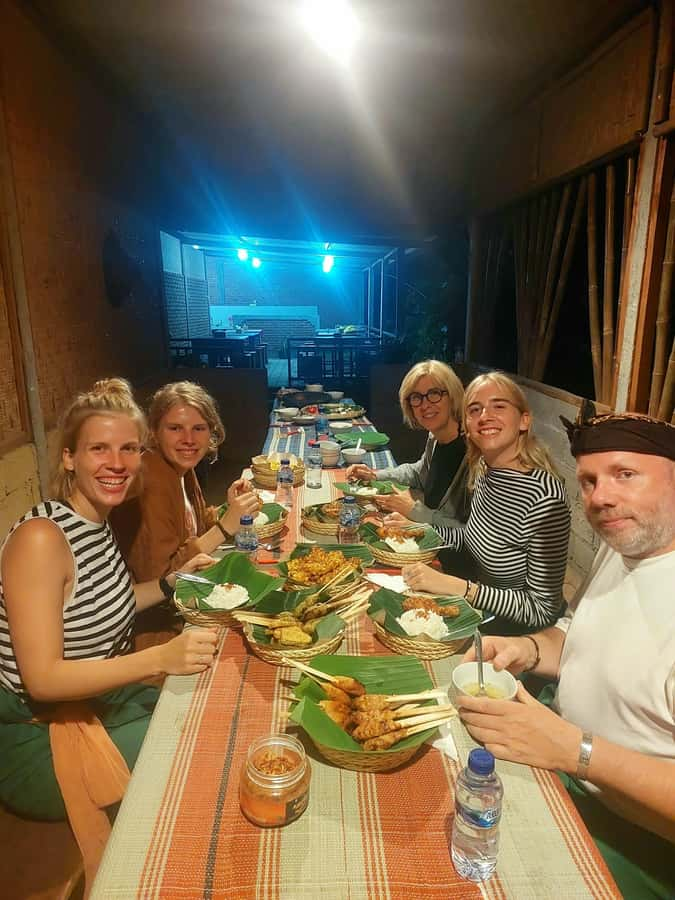
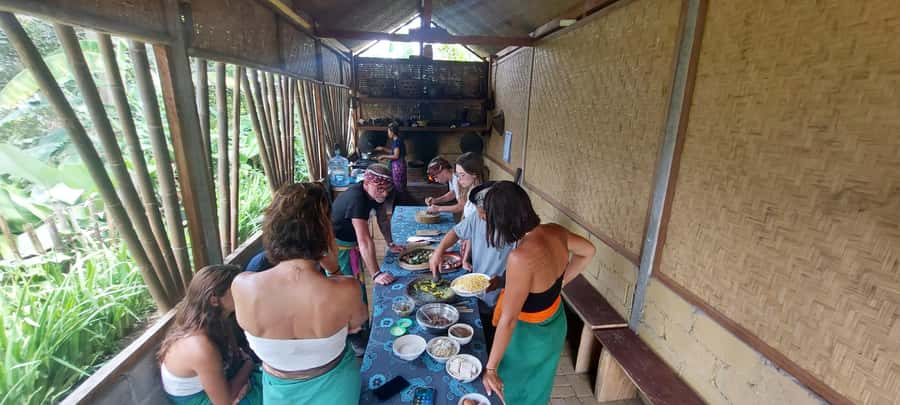
After the preparation, you sit down with your hosts and the other participants to eat the meal. That shared table is a central part of the experience: you are not just carrying home a recipe, but spending time with the people who have guided you through it.
Lunch or dinner depends on the option you book. Drinking water, all ingredients, and cooking equipment are included, so the $18 per-person price covers the core experience and the meal. Personal expenses are not included, and hotel pickup and drop-off only come with the option that includes transport.
The class takes two to three hours. That is long enough to cook several dishes and share a meal, but it is still a significant block of a day. If you are arranging a drive across Bali or squeezing in several activities, leave room for the class and transport rather than assuming it will fit into a quick stop.
The meal itself is a good part of the value. You are paying for hands-on instruction, food, and time in a local home, not just for a plate at a restaurant. If you already plan to eat out in Munduk, the extra cost buys you the process and the cultural exchange as well as dinner.
More tours with lunch around Ubud:
- Ubud: All-Inclusive Tour with Optional Lunch
★ 4.9 · 5,438 reviews - Ubud: Guided ATV Quad Bike Jungle Adventure with Lunch
★ 4.8 · 4,881 reviews - ATV Quad Bike Bali with Waterfall Gorilla Cave and Lunch
★ 5.0 · 1,925 reviews - Electric Cycling Tour of Ubud with Free Hotel Transfer and Lunch
★ 5.0 · 1,397 reviews
Dietary needs and spice preferences
The class offers vegetarian and vegan menus, along with alternatives for people who cannot eat meat, wheat, flour, peanuts, or eggs. That range makes the activity more flexible than many fixed-menu cooking classes, particularly if your household has different dietary needs.
Tell the team about restrictions when you book or before the session. The description says menus are adjusted, but it does not spell out ingredient substitutions or how each dish is changed. If you have a serious allergy, be specific about what you need and confirm the arrangements directly rather than relying on a general menu note.
The food is adapted for international palates and is not intended to be excessively spicy. Even so, Balinese cooking uses aromatic spices and chili, so ask for less heat if you prefer mild food. You can still learn the method and enjoy the meal without trying to prove your bravery to a bowl of sambal.
Getting to the class in Munduk
The meeting point can vary depending on the option you book. Hotel pickup and drop-off are available if selected, and the team says it will contact you by text to confirm your hotel address. Check that your lodging details are correct and choose the pickup option if arranging your own transport would be inconvenient.
One pickup driver named Yudi has been praised for being friendly, but transport may be handled by different people. Kadek is the instructor associated with the cooking class. Knowing these names can help you feel oriented, but do not assume every session will have the same driver or exact team.
Bring comfortable clothes, a sun hat, insect repellent, and a camera. The hat and repellent are useful if you spend time outside around the home or farm; the comfortable clothing is sensible for a hands-on cooking session. The activity is listed as unsuitable for people with altitude sickness, so consider that if altitude affects you.
The host language is English, and an optional English audio guide is listed. The class is meant to be participatory, so expect to follow demonstrations and handle ingredients rather than simply listen. The precise starting times depend on availability.
Is $18 good value?
At $18 per person, the price is modest for a two to three hour activity that includes ingredients, equipment, drinking water, and a full lunch or dinner. You also receive instruction in several recipes, time with a local family, and an introduction to a signature Balinese meal.
The value is strongest if you want more than a restaurant meal. You take part in making the food, learn about Base Genep, and share the finished dishes with the hosts. If you only want a quick meal, a local restaurant will take less time and may cost less. If the cooking and home setting are part of the appeal, this class offers a lot for the price.
Remember that transport is included only with a selected pickup option. The listing does not give a group-size limit, so ask if the number of participants matters to you. The class offers free cancellation up to 24 hours before the activity, and a reserve-now, pay-later option is available.
Who will enjoy this class most?
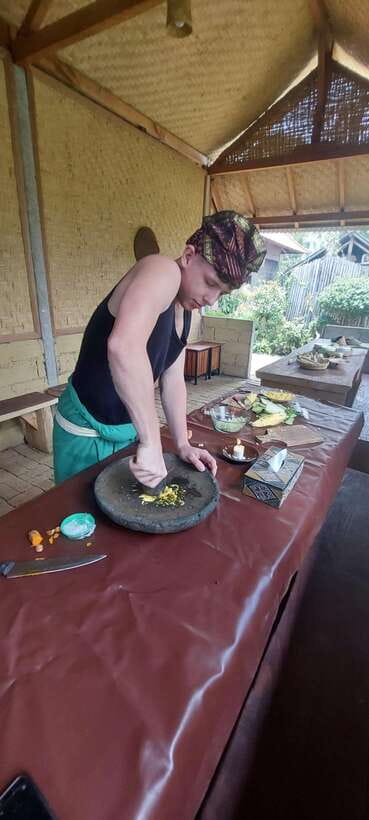
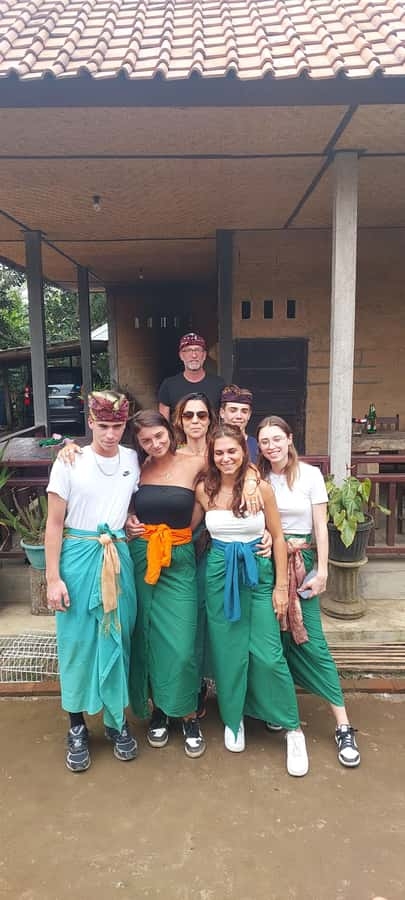
This experience suits curious eaters who want to understand how Balinese dishes are made, not just sample them. It is also a good fit for families: the cooking has hands-on appeal, and children have enjoyed the activity. You do not need to be an experienced cook to take part.
It may be less appealing if you are short on time, uncomfortable cooking in a family home, or looking for a polished restaurant-style event. The setting is personal and relaxed rather than formal. The two to three hour duration, plus any transport, makes it a planned outing rather than a quick add-on.
If you are staying in or near Munduk and want a break from sightseeing, I would put this high on the list. The combination of local cooking, a shared meal, and conversation with the host gives you a closer look at daily life than a menu alone can offer.
Should you book it?
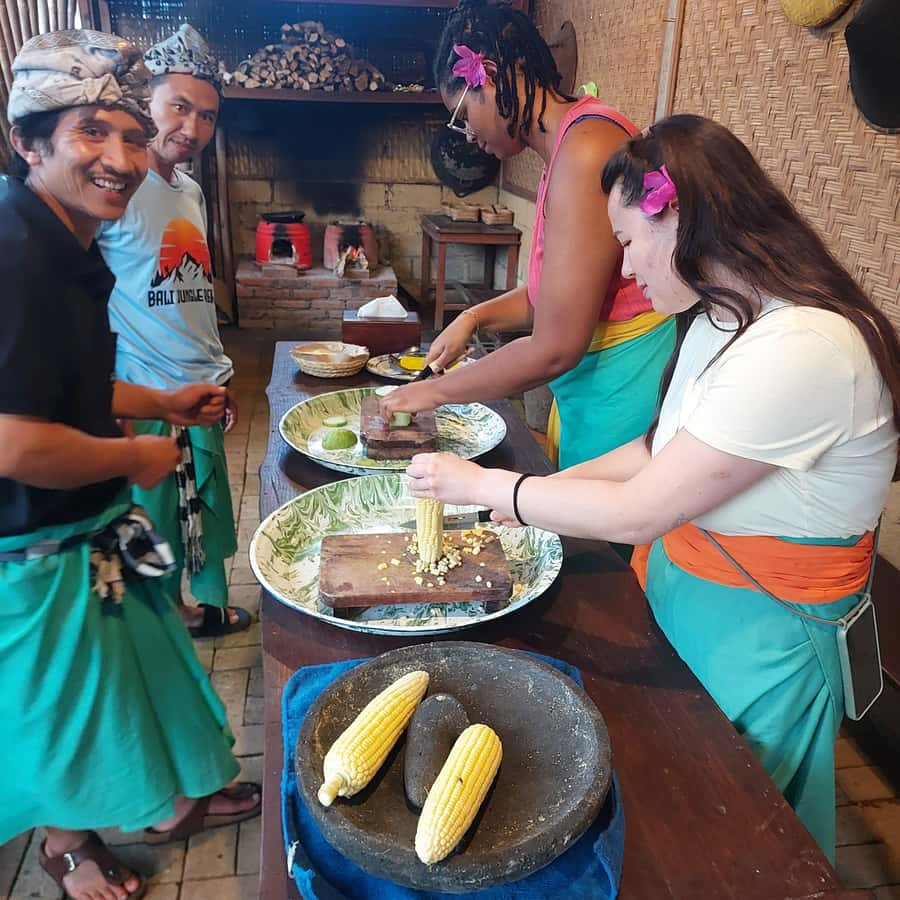
Book this class if you enjoy cooking, want to learn the basics behind Balinese flavors, or would value a meal shared in a family home. At $18, the price is fair for the food, instruction, and time with the host team. Ask about dietary changes and pickup when arranging your session, and allow the full two to three hours. Skip it if your schedule is too tight or you would rather spend your time on a shorter meal stop.
FAQ
How long does the cooking class take?
The activity lasts 2 to 3 hours.
What is the price?
The listed price is $18 per person.
Is lunch or dinner included?
Yes. Depending on the option booked, you eat the meal as lunch or dinner.
What dishes might I prepare?
The menu may include Sate Lilit, Bergedel, Balinese vegetable stir-fry, jukut jepang soup, and Base Genep spice paste.
Can the menu be vegetarian or vegan?
Yes. Vegetarian and vegan menus are available on request.
Can the class accommodate food restrictions?
Options are available for people who cannot eat meat, wheat, flour, peanuts, or eggs. Share your needs with the team in advance.
Is hotel pickup included?
Pickup and drop-off are available if you select that option. The team says it will text to confirm your hotel address.
What should I bring?
Bring a sun hat, camera, comfortable clothes, and insect repellent.
More dining experiences around Ubud
- Mount Batur Sunrise Trekking (Private Tour and Breakfast at Restaurant)
★ 5.0 · 598 reviews - Bali: Uluwatu Temple, Kecak Dance, and Jimbaran Dinner Tour
★ 5.0 · 5 reviews - packages cooking class and romantic dinner in a local home
★ 5.0 · 4 reviews - Bali: Magical Fireflies Tour in Taro Village with Dinner
★ 4.8 · 104 reviews
More evening meals around Ubud
- Uluwatu Sunset, Kecak Dance, and Dinner Jimbaran Beach
★ 5.0 · 3,681 reviews - Ubud: Dance Show + Dinner at Lost City – Story of Humanity
★ 4.5 · 94 reviews - Ubud: Dinner Show Lost City – Story of Humanity Experience
★ 4.3 · 37 reviews - Ubud: Village Firefly Night Tour with Dinner
★ 4.9 · 23 reviews
Fresh listings around Ubud
- Tour the island of Bali with expert tour guides in Spanish.★ 5.0 · 7 reviews
- Tour full day ubud, water fall,coffe atv,and rice paddy★ 5.0 · 6 reviews
- The Authentic Balinese Cooking Experience★ 5.0 · 4 reviews
- Sunrise Café and Morning Yoga Class★ 5.0 · 5 reviews
- Private Ubud Tour With Professional Photographer with Edit★ 5.0 · 53 reviews
- Quad Bike Bali With Tunnel & Waterfall Tour★ 4.2 · 8 reviews
- Private Ubud Tour: Sacred Monkeys, Coffee, Temple, Waterfall★ 4.8 · 3 reviews
- Private Silver jewelry Making Class With Master★ 5.0 · 3 reviews
Ubud Cooking Classes, compared.
Cooking Class with Transfers and Optional Market Visit
Read our review →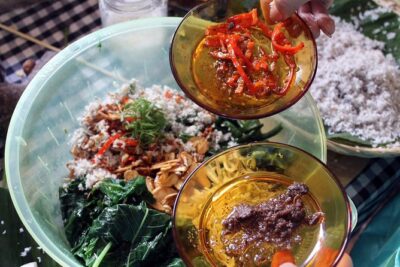
PRIVATE Authentic Balinese Cooking Class in Ubud at Putu’s Home
Read our review →
Balinese Ubud cooking school (9 Dish Cooking and Market Tour)
Read our review →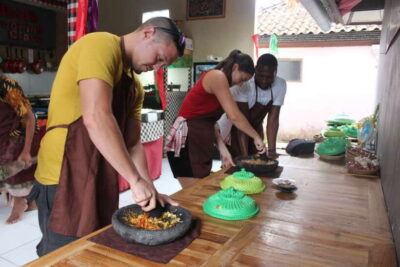
Browse the lists this tour appears in