
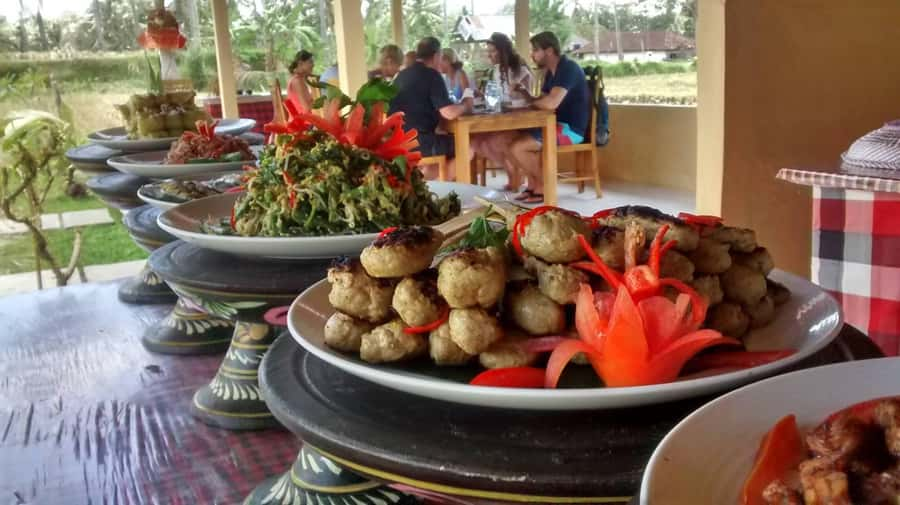
Reviewed · UBUD COOKING CLASSES
Ubud Cooking : All Inclusive Cooking Class
The morning starts at Pejeng market, where you can see locals shopping for cooking ingredients and sample local fruit before heading to a cooking class near Ubud. You’ll learn about Balinese rice and make traditional dishes with a local guide in a setting that includes paddy fields and a Balinese compound.
I like two things in particular: you do the cooking yourself, and the market visit gives the food more context than a kitchen lesson alone. One consideration: the meal may not be large enough to count on as your only lunch, so plan accordingly.
Key points to know
- Pejeng market is a morning-only stop. Choose the morning class if seeing local shopping and produce matters to you.
- Expect hands-on cooking. You’ll make the dishes yourself, with a guide leading the steps.
- The class covers Balinese food and rice. You’ll hear how rice is grown and harvested, as well as how ingredients are used in local cooking.
- Plan for roughly eight recipes. The exact number of finished dishes may vary, with past classes described as making six or seven.
- Ubud-area pickup and drop-off are included. Pickup outside the area costs extra.
- The meal is part of the class, but portions may be modest. Keep a backup snack in mind if you have a big appetite.
From Pejeng market to the cooking table
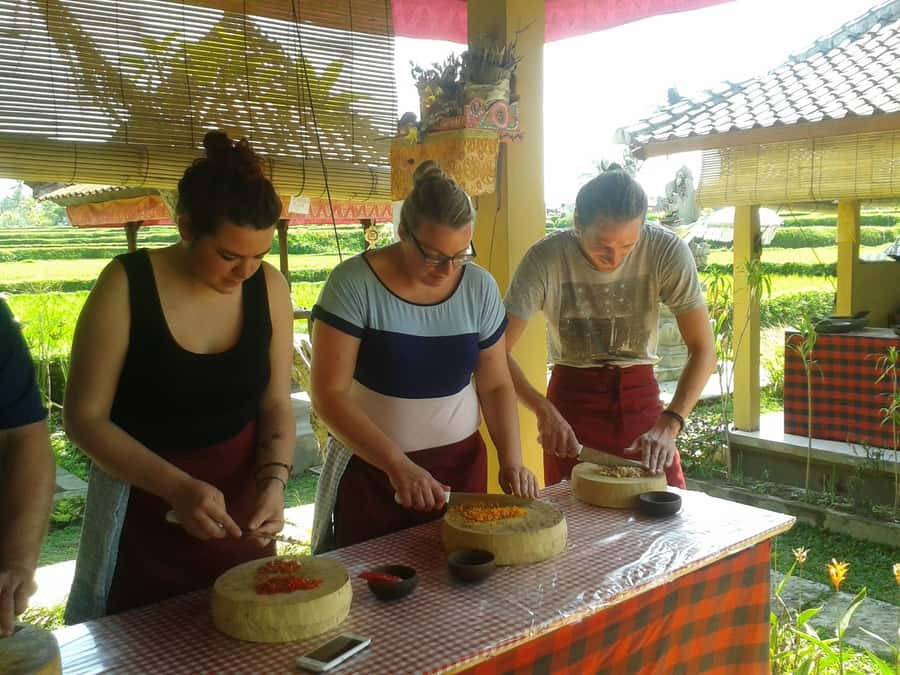
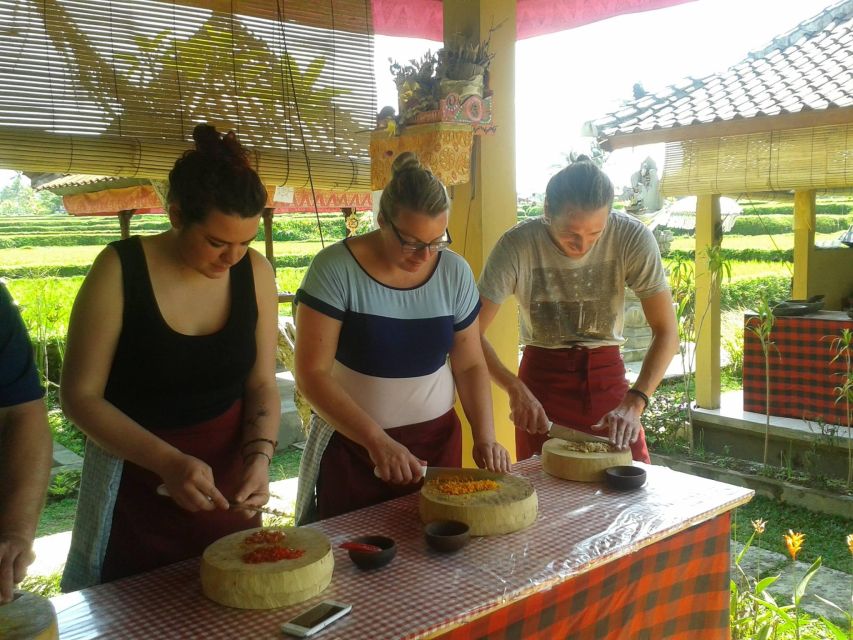
This five-hour outing combines several parts of a Bali food experience: a market visit, a look at rice cultivation, a cooking lesson and a shared meal. It is not just a demonstration. You make the food yourself, with a local chef guiding you through the work.
The morning option begins at Pasar Pejeng, a local market where you can see how people buy and sell ingredients used in everyday cooking. The visit lasts about 30 minutes, so think of it as a lively introduction rather than a long market expedition. You may try local fruit, and your guide can explain the produce and ingredients you see.
That context is useful once you get to the kitchen. You’ll have a better sense of what goes into Balinese cooking and why the ingredients matter, rather than simply following a recipe with no background. The tour also includes information about rice grown in Bali, how it is cultivated and how it is harvested.
After the market, you head to the Ubud cooking class. The listed class time is about two hours, within a five-hour total outing. The rest of the schedule allows for the market visit and transportation, though exact timings and travel time depend on the day and pickup point.
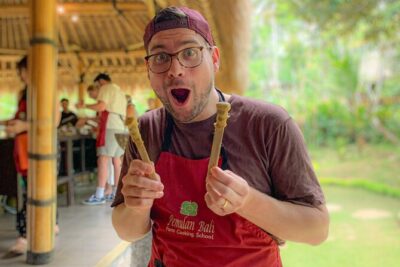
The class takes place in a Balinese compound, with paddy fields among the settings described for the experience. That is a welcome change from a standard indoor cooking school. You’re not only preparing food, but also getting a glimpse of the everyday surroundings that give the meal its local context.
More cooking classes around Ubud:
- Ubud Cooking Class Bali with Balinese Chef
★ 5.0 · 1,609 reviews - Ubud: Cooking Class with Transfers and Optional Market Visit
★ 4.9 · 824 reviews - PRIVATE Authentic Balinese Cooking Class in Ubud at Putu’s Home
★ 5.0 · 644 reviews
Making the dishes yourself
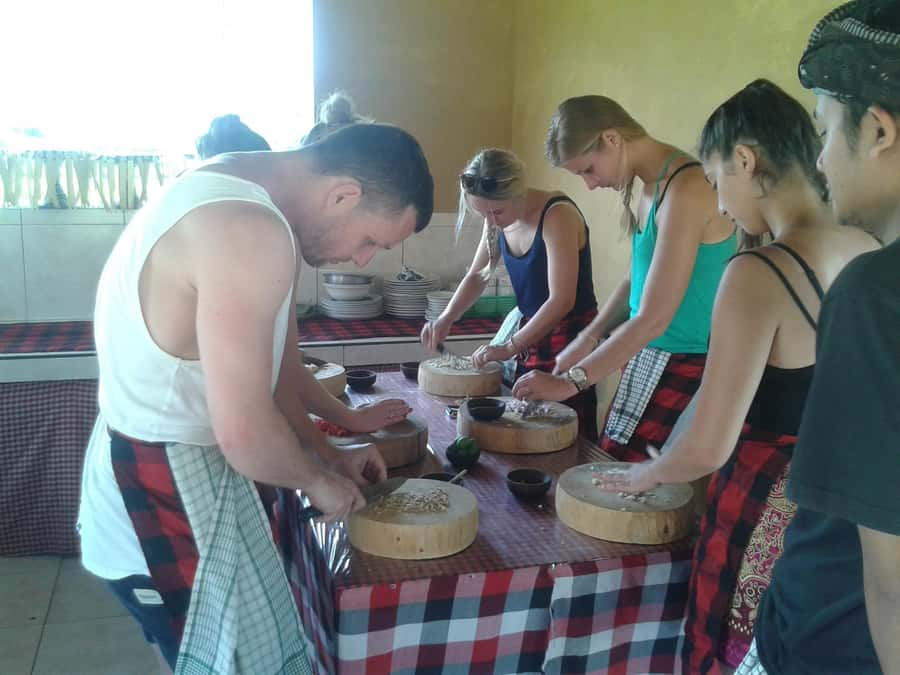
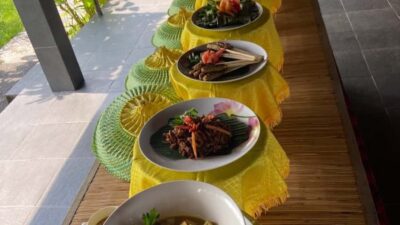
The core of the class is its hands-on format. The guide walks you through the preparation of traditional Balinese dishes, and you take part in making the menu rather than watching someone else do it. The class is advertised as covering eight signature recipes, while descriptions of past sessions range from six to seven dishes. Treat eight as the intended scope, not a guaranteed count.
The number matters less than the variety of work involved. You’ll prepare several dishes and taste what you make as the class progresses. That lets you notice how different ingredients and cooking steps shape the final meal, and gives you more than one recipe to try at home.
English instruction is provided, and the guide is there to explain each step. The class is suitable for people with different levels of cooking experience: the process is guided, and you get to do the work yourself. If you like learning by trying, adjusting and asking questions, this format should suit you better than a polished cooking demonstration.
The class can also accommodate vegan and vegetarian cooking, and a participant with a peanut allergy found the team accommodating. If you have an allergy or dietary requirement, tell the provider in advance rather than assuming every menu can be changed on the day. The information available does not specify which dishes can be adapted.
The rice-field setting adds more than a view
The paddy fields are part of the appeal, but the rice lesson is the more useful detail. Rice is central to Balinese meals, and hearing how it is grown and harvested helps connect the cooking class to the wider food culture. It turns the class into more than a recipe session.
You’ll also explore activities in a real Balinese compound. The details of the compound visit are not specified, so don’t expect a fixed tour of particular rooms or buildings. What you can count on is a setting that gives the cooking lesson a stronger sense of place than a generic kitchen.
Weather may shape the day. The class can work as a rainy-day activity, since the main cooking portion takes place in an open kitchen. Bring cash, as requested, and be ready for a morning that includes time outside at the market and among the fields.
What you eat, and how much
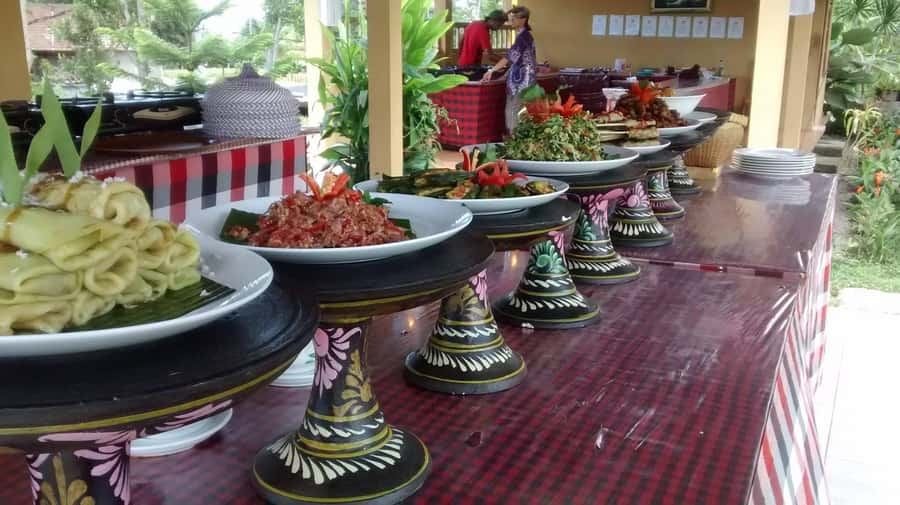
The meal is the reward for the work, and you taste the food you have prepared. The menu is described as a range of Balinese dishes, with the exact recipes not specified in advance. That makes the class appealing if you’re curious about local flavors, though less suitable if you need to know every dish before booking.
A practical note: the meal may not be enough to fill you up. One account described the food as good but not quite a full meal, so I would not plan the rest of your day on the assumption that lunch is guaranteed to be substantial. Have a light breakfast before the class, and keep a snack or later meal in mind.
At the end, you receive a PDF copy of the recipes. That is one of the class’s best value points: the experience does not end when you leave Bali. You can use the instructions to recreate the dishes at home, although you may need to find suitable ingredients where you live.
More hands-on workshops around Ubud:
- Hands-On Silver Jewelry Making Near Ubud’s Monkey Forest
★ 4.9 · 1,789 reviews - Ubud Silver Class Jewelry making in bali
★ 5.0 · 978 reviews - Canggu: Bali Turtle Silver & Gold Workshop
★ 4.9 · 643 reviews - Ubud: Balinese Cooking Class and Market Tour
★ 4.8 · 531 reviews
Pickup, timing and the $24 price
The class costs $24 per person and lasts five hours. For an outing that includes a market visit, guide, cooking lesson, meal, Ubud-area pickup and drop-off, and recipe PDF, that is a good amount of activity for the price. It is especially strong value if you want to learn about local food and take part, rather than simply eat a meal.
Pickup and drop-off are offered in the Ubud area. The listed pickup points include Kantor Kecamatan Ubud, Dewangga Ubud, Coco Supermarket, Yulia Village Inn and Bintang Supermarket Ubud. The same locations are listed for drop-off. Hotel pickup is included only in the Ubud area, with an additional charge for pickup outside it.
Check the available starting times before booking, especially if the market visit is a priority. The market is included only with the morning option. Afternoon classes may still offer the cooking experience, but you should not assume they include a market walk.
The booking terms allow you to reserve without paying immediately, and cancellation up to 24 hours in advance qualifies for a full refund. Those options offer some flexibility if your plans are still taking shape. The instructor speaks English.
Who will get the most from this class
This is a good fit if you enjoy practical activities and want to bring home something more useful than a few holiday photos. You’ll learn recipes, hear about local ingredients and rice, and get to cook rather than sit back and watch. The morning market adds value for anyone interested in how food is bought and sold locally.
It also suits mixed groups, including vegetarians and vegans, provided you discuss dietary needs ahead of time. The friendly, step-by-step approach makes it approachable even if you don’t cook much at home. And because the setting is part of the experience, it can be a welcome change of pace from Ubud’s shops and cafés.
It may be a weaker choice if you want a long market tour, a guaranteed feast-sized lunch, or a class with a published menu. The market stop is short, the meal size may vary, and the recipes are not listed in detail. If any of those points are important, ask the operator before booking.
The activity is marked as unsuitable for people with altitude sickness. That is an unusual note for a Ubud cooking class, and no explanation is provided, so check with the provider if it applies to you. Alcohol and drugs are not allowed.
Should you book the Ubud cooking class?
Book it if you want to spend a morning learning to make Balinese food, enjoy a short market visit and come away with recipes you can use again. The best version for most people is the morning option, since it combines the market with the cooking and rice-field setting.
At $24, the combination of transport within Ubud, guided instruction, a meal and take-home recipes offers solid value. Just keep expectations practical: the market visit is brief, the dish count may vary, and the food may not be a full lunch for everyone. If those limits sound fair, this is a worthwhile way to spend half a day in Ubud.
FAQ
How long does the Ubud cooking class last?
The full activity lasts five hours. The market visit is about 30 minutes, and the cooking class is listed as about two hours.
Does the tour include a morning market visit?
Yes, the morning option includes a visit to Pasar Pejeng local market. The market tour is not included with other options.
What will I cook?
You’ll make Balinese dishes with a local chef guiding you. The class is described as covering eight recipes, though the number of dishes made may vary.
Do I get to eat the food I make?
Yes. You taste and enjoy the food prepared during the class.
Is pickup included?
Pickup and drop-off are included in the Ubud area. Pickup outside Ubud costs extra.
Where are the listed pickup points?
The listed locations are Kantor Kecamatan Ubud, Dewangga Ubud, Coco Supermarket, Yulia Village Inn and Bintang Supermarket Ubud.
Is the class taught in English?
Yes. The instructor speaks English.
Can the class accommodate vegetarian, vegan or allergy needs?
The class can accommodate vegan and vegetarian cooking, and peanut allergy accommodation has been reported. Contact the provider about your specific needs before booking.
What should I bring, and what is not allowed?
Bring cash. Alcohol and drugs are not allowed.
Fresh listings around Ubud
- Tour the island of Bali with expert tour guides in Spanish.★ 5.0 · 7 reviews
- Tour full day ubud, water fall,coffe atv,and rice paddy★ 5.0 · 6 reviews
- The Authentic Balinese Cooking Experience★ 5.0 · 4 reviews
- Sunrise Café and Morning Yoga Class★ 5.0 · 5 reviews
- Private Ubud Tour With Professional Photographer with Edit★ 5.0 · 53 reviews
- Quad Bike Bali With Tunnel & Waterfall Tour★ 4.2 · 8 reviews
- Private Ubud Tour: Sacred Monkeys, Coffee, Temple, Waterfall★ 4.8 · 3 reviews
- Private Silver jewelry Making Class With Master★ 5.0 · 3 reviews
Ubud Cooking Classes, compared.
Cooking Class with Transfers and Optional Market Visit
Read our review →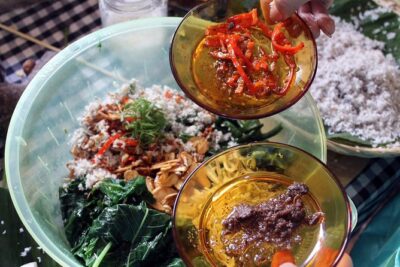
PRIVATE Authentic Balinese Cooking Class in Ubud at Putu’s Home
Read our review →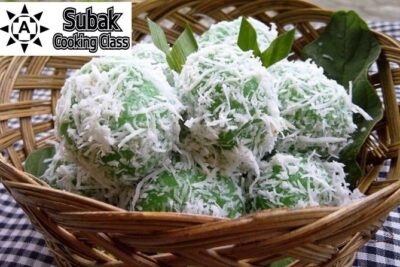
Balinese Ubud cooking school (9 Dish Cooking and Market Tour)
Read our review →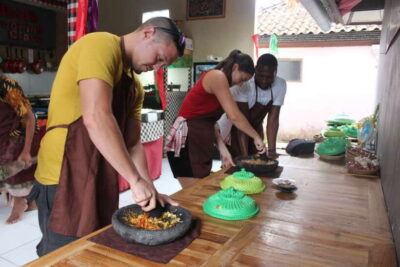
Browse the lists this tour appears in