
Reviewed · UBUD COOKING CLASSES
Balinese Authentic Cooking Class in Ubud
Balinese cooking here starts well before the stove: you may visit a local market, see a family compound, and pick spices at the farm where the class takes place. I like that the day connects food with the homes and ingredients behind it, and that you get hands-on practice with traditional tools such as a large mortar and pestle.
The main consideration is the schedule. The market visit is for the morning class only, and pickup is included only in Ubud. With a maximum group size of 15, the class is small enough for personal help, but it is still a group lesson, not a private session unless your booking happens to be the only one that day.
- Morning market stop: See local ingredients and buy spices with your guide; this part is offered only in the morning.
- Balinese home visit: Learn about family compounds and local daily life over coffee, tea, and a snack.
- Farm-to-table cooking: Walk through the farm, gather spices, then prepare Balinese dishes with a local chef.
- Three menu choices: Regular, vegetarian, and vegan options are available.
- Ubud pickup included: Transfers are free within the Ubud area; rides from other areas cost extra.
- A full meal at the end: The cooking usually yields several dishes, so arrive hungry and allow time to eat.
A morning that begins with ingredients, not recipes
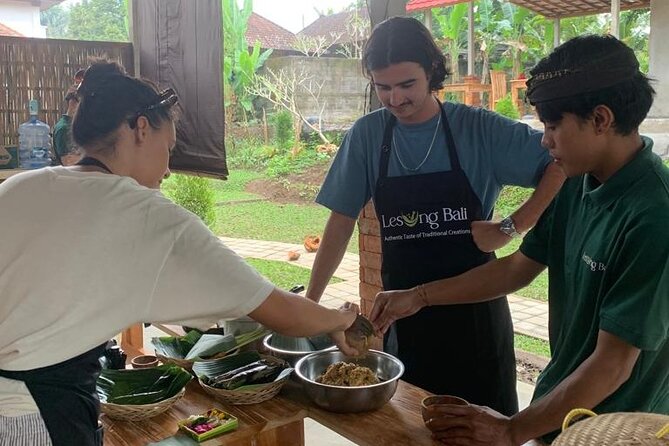
This is more than a cooking lesson with a few ingredients set out on a counter. The experience links Balinese food to the market, a local home, and a farm, then gives you time to prepare and eat what you have made. That context is the real reason to choose this class over a short demonstration.
The outing lasts about five hours, and you can book a morning, afternoon, or evening session. The sequence can vary by time: only the morning class includes the traditional market visit. All versions include cooking at the farm, with regular, vegetarian, and vegan menus to choose from.
The class takes place on the west side of Ubud, in a countryside setting surrounded by greenery. That setting makes a pleasant change from town, but it also means transport matters. Free shuttle service is available within Ubud, while pickup outside that area costs extra.
The morning market and the food behind it
If you choose the morning session, the day begins at a traditional market. You’ll see the kinds of produce and spices used in Balinese cooking, and there may be a chance to sample local fruit. Your guide can explain how ingredients fit into local food and market life, rather than simply naming each item.
The market visit also gives you a useful head start on the cooking. After seeing the fresh ingredients in their everyday setting, you’ll recognize some of them again when you gather spices at the farm and use them in the kitchen. You can ask questions as you go, so bring your curiosity along with your appetite.
This stop is not part of the afternoon or evening class. If the market is important to you, book the morning option and check the meeting time before you go. If you prefer a slower start, the later sessions still include the cultural visit and cooking.
More cooking classes around Ubud:
- Ubud Cooking Class Bali with Balinese Chef
★ 5.0 · 1,609 reviews - Ubud: Cooking Class with Transfers and Optional Market Visit
★ 4.9 · 824 reviews - PRIVATE Authentic Balinese Cooking Class in Ubud at Putu’s Home
★ 5.0 · 644 reviews
A local home offers a window into Balinese life
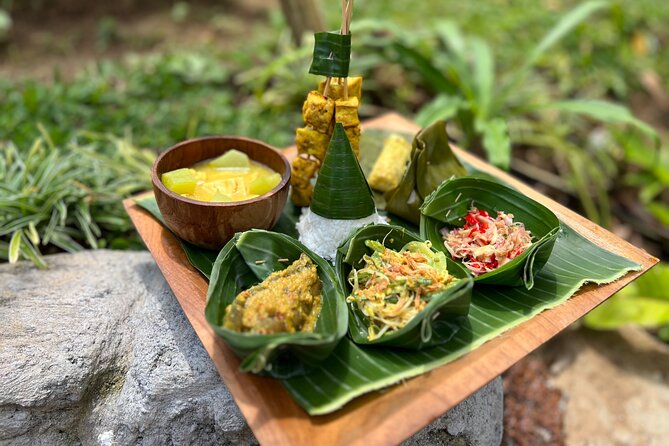
After the market, the group visits a traditional Balinese home. The purpose is to introduce the family compound and explain how the buildings are arranged, as well as something about local customs and daily life. It adds human context to a class that might otherwise focus only on food.
Expect a relaxed visit, often with coffee or tea and a local snack. Some instructors use this time for conversation about family life, community, and traditions. The precise experience can depend on the host and session, so think of it as an introduction rather than a formal or exhaustive tour of Balinese culture.
The home visit is one of the most valuable parts for anyone who wants to understand more than the ingredients. Food is closely tied to home and community, and seeing a family compound helps you place the cooking in a lived setting. If you are mainly looking for a fast, recipe-focused lesson, this slower cultural stop may feel like extra time. For most people, it is a worthwhile part of the day.
Gathering spices at the farm
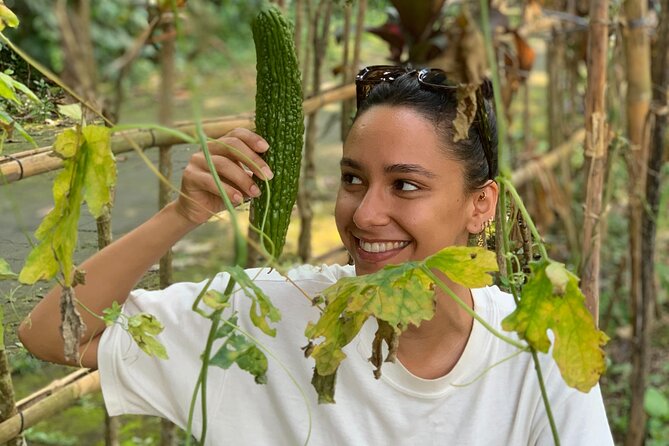
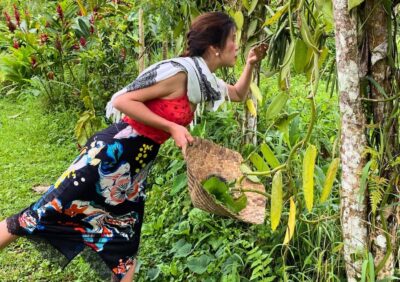
The class then moves to the farm, where you explore the grounds and gather spices for the dishes. The exact crops and ingredients depend on the menu and what is growing, but the point is clear: the food begins with fresh produce close at hand, not a packet of pre-measured seasonings.
This is a good moment to ask what each ingredient does. Balinese dishes often build their flavor from a mix of spices, and learning what goes into the mix can make the recipes easier to repeat at home. The farm visit also gives you a practical way to connect what you saw at the market with what goes into the cooking.
The setting is described as green and calm, with a separate cooking area and the tools needed for the lesson. Several menu options are offered, but the exact dishes are not fixed in the information available. It is reasonable to expect a selection of Balinese recipes, not to assume a particular menu in advance.
Cooking with a mortar, pestle, and local chef
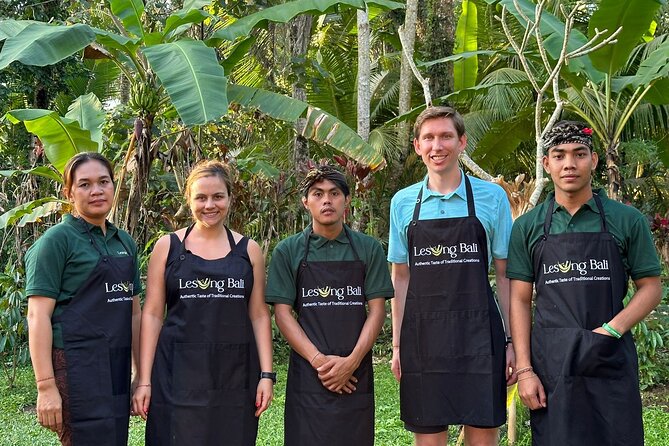
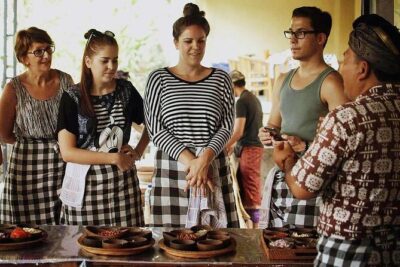
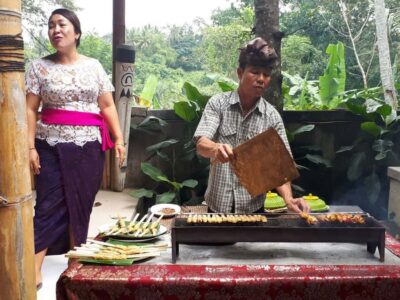
Once the menu is decided, a Balinese chef leads the cooking. You’ll learn techniques used in local kitchens, including chopping and pounding spices with a lesung, a large mortar and pestle. It is hands-on work, and the instructor guides you through the ingredients and methods as you prepare the dishes.
Instructors named for this experience include Ron, Putri, Gustie, Don, and Begul. The person teaching your session can vary. The strongest part of the format is the chance to ask questions and get help while you cook, rather than watching a chef do everything from a distance. Beginners are welcome, and you do not need to arrive with kitchen skills.
The lesson can take about two hours of cooking, though the full outing is around five hours once visits and transfers are included. Some sessions prepare six dishes, including dessert, but the menu can vary. You may make most of the meal yourself, although one participant noted that rice was prepared separately. If you want to handle every part of the meal, ask your instructor what the session includes.
A small-group cap of 15 helps keep the class personal, but the amount of individual attention can still vary with the group and pace. One useful tip: ask about unfamiliar spices as they are added. The chef may move quickly through familiar steps, and a quick question can turn a tasty meal into a recipe you can actually recreate.
More hands-on workshops around Ubud:
- Hands-On Silver Jewelry Making Near Ubud’s Monkey Forest
★ 4.9 · 1,789 reviews - Ubud Silver Class Jewelry making in bali
★ 5.0 · 978 reviews - Canggu: Bali Turtle Silver & Gold Workshop
★ 4.9 · 643 reviews - Ubud: Balinese Cooking Class and Market Tour
★ 4.8 · 531 reviews
The meal is part of the lesson
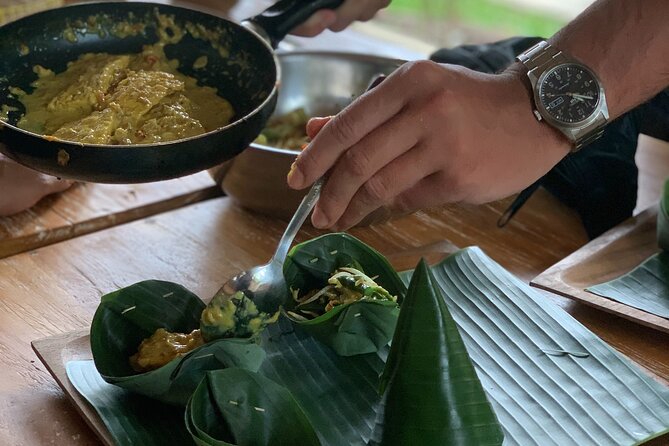
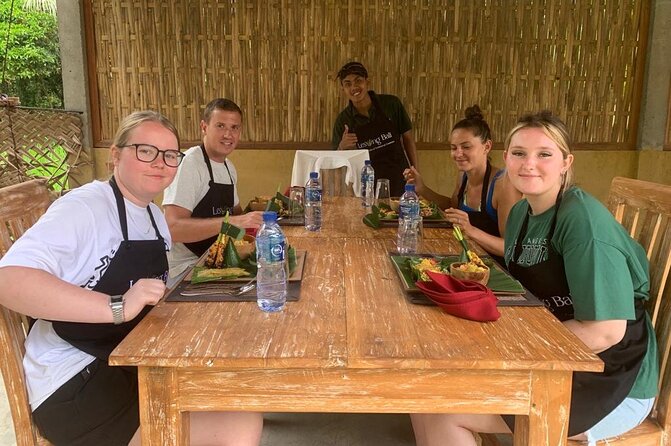
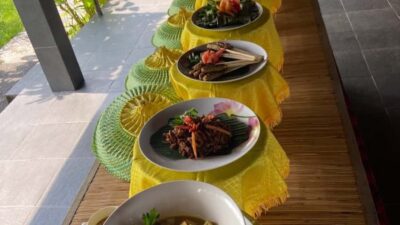
At the end, you sit down to eat the dishes you have prepared. Many sessions produce a generous amount of food, often enough to leave you full, so do not plan a large lunch immediately afterward. Coffee or tea, mineral water, and a Balinese cake are included, along with the meal you cook.
Eating together gives you a chance to compare flavors and see how the dishes work as a meal, not just as individual recipes. It also makes the lesson feel complete: you have seen ingredients in the market or farm, learned how to prepare them, and tasted the result.
Vegetarian and vegan options make the class useful for people with different diets. The available information confirms those menu choices, but does not spell out how every dietary restriction or allergy is handled. If you have a specific requirement, contact the provider before booking rather than assuming a menu can be adapted.
What the price covers, and what it does not
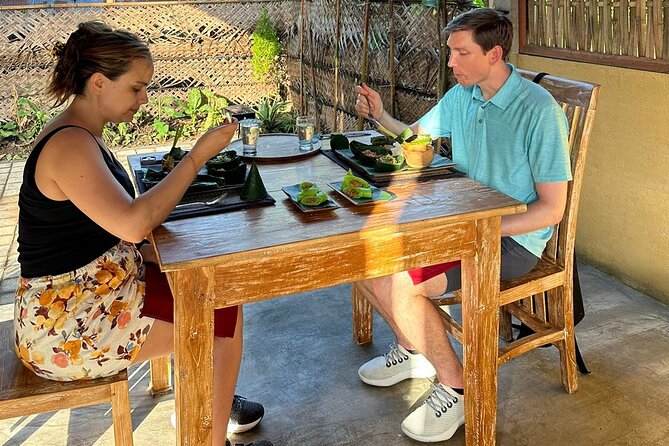
At $39.71 per person, this is a good-value half-day if you want more than a cooking demonstration. The price brings together a cultural visit, farm time, instruction, ingredients, a substantial meal, drinks, and Ubud-area shuttle service. You are paying for several connected activities, not only the time at the stove.
The value is especially strong if you book the morning session and make use of the market stop. The afternoon and evening options still include the home and farm elements, but you miss the market. If you are comparing classes, check what each includes: transfers and cultural visits can make a noticeable difference to the day.
Pickup and drop-off outside Ubud are not included. Extra car charges listed for other areas are IDR 450,000 for Kuta, Seminyak, Sanur, and Canggu; IDR 500,000 for Nusa Dua and Jimbaran; and IDR 550,000 for Uluwatu. Those are per car, so the cost may be easier to share if you are travelling with others. Confirm the transport charge for your exact location before booking.
The class offers group discounts, though the amount is not specified. With a maximum of 15 people, you should not expect a large tour-bus crowd, but you may share the kitchen and instructor’s attention with other participants. A solo visitor may still find it a comfortable way to meet people, while a couple or family can share the cooking and meal.
Choosing a session and planning your day
Choose the morning class if the market matters to you. It gives the day a natural progression from ingredients to cooking, and it is the only option that includes the market stop. Afternoon or evening sessions suit you better if you do not want an early start, but the exact start times are not provided here.
Allow about five hours for the experience, plus any travel time to and from your accommodation. Ubud-area shuttle service is included, and communication about pickup is described as clear by some people who took the class. Still, share your accommodation details carefully and confirm the pickup arrangement.
Dress for a countryside visit and a practical cooking session. The information does not specify clothing rules or facilities, so keep plans simple and ask the provider directly if you have a particular need. The class requires good weather, and a minimum number of participants may be needed. If poor weather or too few bookings cancel the session, you will be offered another date or experience, or a refund.
Free cancellation is available up to 24 hours before the start time. A cancellation made less than 24 hours in advance is not refundable, and changes within that window are not accepted. Keep the local start time in mind when deciding whether to change your plans.
Who will enjoy this class most
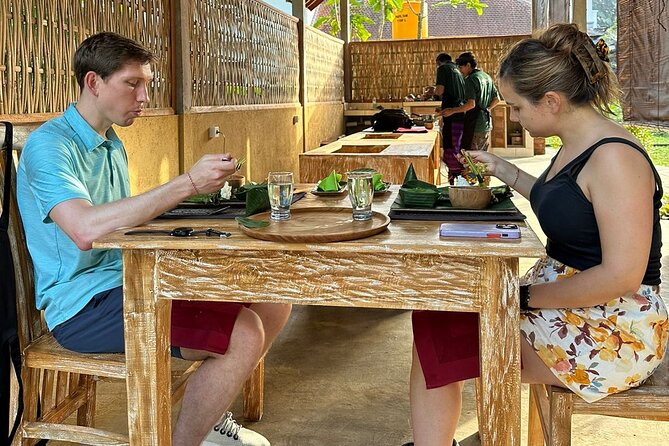
This experience suits you if you enjoy cooking, local food, or learning about everyday life as part of a cultural visit. It works for beginners as well as confident home cooks, since the chef demonstrates the methods and offers help. The lesson is not just about following a recipe; you also get a chance to see where ingredients grow and how a Balinese family compound is arranged.
It is also a good fit for solo visitors, couples, and small groups who like doing something together. Vegetarian and vegan menus widen the appeal, and the market and home visits give non-cooks a reason to come along. If you are travelling with children or have specific access needs, the supplied details do not explain suitability, so check directly with Lesung Bali before you book.
You may want another activity if you only have a short window in Ubud, dislike group instruction, or want a guaranteed private lesson. The class can include up to 15 people, and the five-hour format takes up a solid half-day. In return, you get a much fuller look at Balinese food than a quick lesson in a restaurant kitchen.
Should you book the Balinese cooking class?
I’d book this if you want a practical cooking lesson tied to local life, especially if you can take the morning session. The market, family home, farm, and shared meal make a satisfying sequence, and the price includes several elements that would be separate outings elsewhere.
Before you commit, confirm your menu needs, pickup location, and session time. Book the morning option for the market, and allow for extra transport charges if you are staying outside Ubud. If those details work for you, this is a strong choice for a half-day that leaves you with both a full stomach and recipes to try at home.
FAQ
How long is the cooking class?
The experience lasts about five hours, including the visits and cooking. The cooking portion itself may take around two hours.
Is the market visit included in every session?
No. The traditional market visit is available with the morning class only. Afternoon and evening sessions are also offered.
Can I choose a vegetarian or vegan menu?
Yes. Regular, vegetarian, and vegan options are available. Contact Lesung Bali before booking if you have a specific dietary requirement.
Is pickup included in the price?
Free shuttle service is included within the Ubud area. Pickup and drop-off outside Ubud cost extra. Listed car charges vary by area, from IDR 450,000 to IDR 550,000.
How many people can join the class?
The activity has a maximum of 15 participants.
What happens if the class is canceled because of weather or too few participants?
You will be offered a different date or experience, or a full refund. You can also cancel for a full refund if you do so at least 24 hours before the start time.
Fresh listings around Ubud
- Tour the island of Bali with expert tour guides in Spanish.★ 5.0 · 7 reviews
- Tour full day ubud, water fall,coffe atv,and rice paddy★ 5.0 · 6 reviews
- The Authentic Balinese Cooking Experience★ 5.0 · 4 reviews
- Sunrise Café and Morning Yoga Class★ 5.0 · 5 reviews
- Private Ubud Tour With Professional Photographer with Edit★ 5.0 · 53 reviews
- Quad Bike Bali With Tunnel & Waterfall Tour★ 4.2 · 8 reviews
- Private Ubud Tour: Sacred Monkeys, Coffee, Temple, Waterfall★ 4.8 · 3 reviews
- Private Silver jewelry Making Class With Master★ 5.0 · 3 reviews
Ubud Cooking Classes, compared.
Cooking Class with Transfers and Optional Market Visit
Read our review →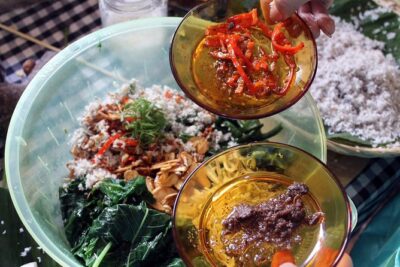
PRIVATE Authentic Balinese Cooking Class in Ubud at Putu’s Home
Read our review →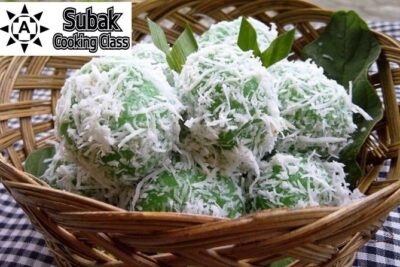
Balinese Ubud cooking school (9 Dish Cooking and Market Tour)
Read our review →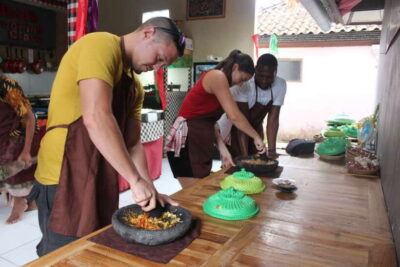
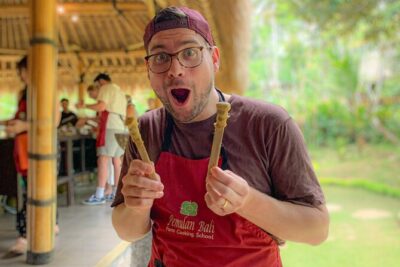
Browse the lists this tour appears in